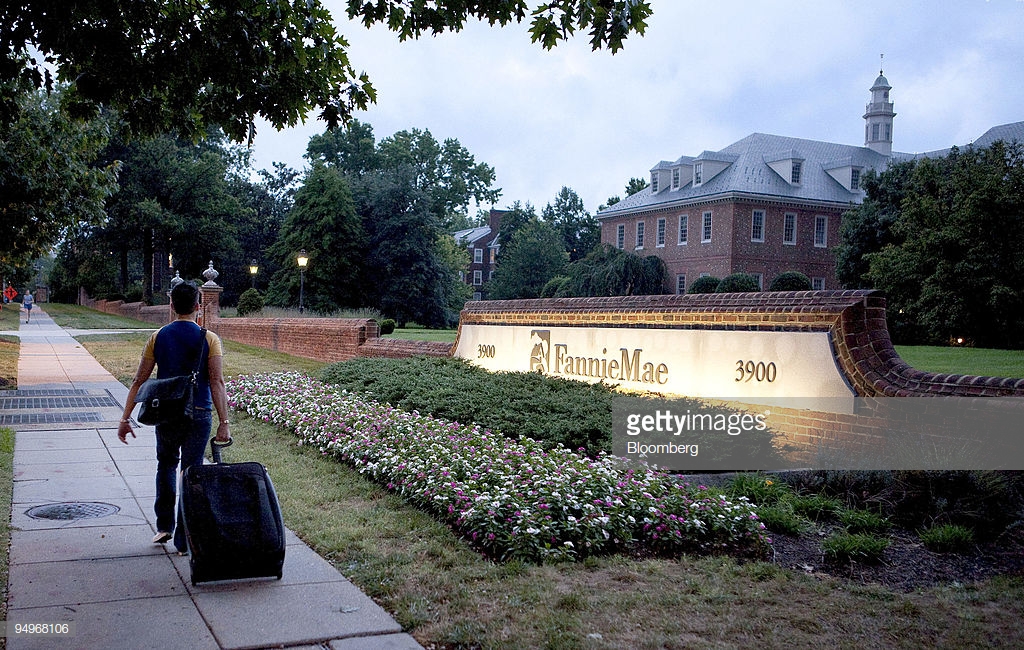
Mortgage crisis: A 10-year retrospective


Real estate is a key component of the U.S. economy.   Aside from providing basic shelter, it is a commodity that consumers desire to purchase and a mortgage is used to finance the transaction.  Yet, it was the environment in 2008 where an industry as we knew it offered slim prospects of recovery.


Fast forward to 2018, recovery is obvious.  home prices continue to climb to record levels leaving many to wonder if they will ever be able to afford a home, let alone experience the “American dream?”   At the same time if must not be discounted that millions, for various reasons lost homes.  For them, then and now home-ownership represents the biggest transaction they will complete in their lifetime.  Likewise, it represents the biggest financial asset.

NEW YORK – SEPTEMBER 17: Traders work on the floor of the New York Stock Exchange September 17, 2008 in New York City. The Dow Jones Industrial Average closed down 449 points today despite American International Group, Inc. (AIG) $85 billion government bailout. (Photo by Mario Tama/Getty Images)

For some 2008 seemed like a lifetime ago.  No doubt it was a scary time especially for those who were part of the economic meltdown.  Cash was tight, employment or the ability to earn a living was in great jeopardy, homes which were treasured started disappearing in record numbers – like never seen before.   Many were lured into the notion property appreciation was constant and even though they may have bet on risky mortgage products, they felt confident they would be able to refinance out of any calamity.  Political leaders labeled the period as one not seen since the great depression of the 1930’s.

 

BOWIE, MD-AUGUST 18: Comfort Boateng sorts through two large boxes of mortgage and financial papers as she talks about their financial situation on August 18, 2014 in Bowie, Maryland. The Boatengs continue to live in their home where they haven’t made a mortgage payment in nearly six years. They built the 3,292-square-foot Fairwood home in 2005. Fairwood, is among one of the richest black neighborhoods in America, in Prince Georges County Maryland; yet it was among the hardest hit from the financial crisis of 2008. More than half of the people who bought homes there wound up in foreclosure. (Photo by Michel du Cille/The Washington Post via Getty Images)

Here is a list of lenders who imploded starting in 2006


Subprime blamed


The crisis erupted in 2008, however signs were simmering that something might be amiss as early as 2005.  Interestingly it was a common refrain for the very political leaders and even industry leaders to target the culprit as subprime lending.  The problem with that assessment is it is incorrect, at least from a practical definition.

WILMINGTON, OH – DECEMBER 19: Bill and Dottie Neace embrace in their home December 19, 2008 in Wilmington, Ohio. Dottie Neace, currently undergoing radiation treatment for breast cancer, fears she may not be able to continue her treatments if her husband loses his job, which provides their health insurance. He works for the air shipping company ABX, which is currently laying off thousands of workers. He recently underwent surgery for a ruptured colon, making eligibility for affordable post-employment healthcare uncertain. The job cuts between air shipping partners ABX and DHL, the two largest employers in Wilmington, will total between 7,000-10,000 lost jobs. The resulting high rate of unemployment is expected to devastate the local economy, both in terms of health coverage for residents, joblessness and in lost tax revenues to support schools and basic services in the area. (Photo by John Moore/Getty Images)

Prior to subprime coming into the mortgage vernacular in the mid 1990’s, most mortgages were considered prime.   You had to fully qualify, including for some with what appeared to be exhaustive documentation. . Your credit was not required to be perfect as long as any blemishes could be documented and explained.


Sub is a suffix and means “less than” or “below.”  Unfortunately, some would have you believe it meant bad credit, inferior housing or something that was substandard.  No doubt many who obtained mortgages were in that population but there was a good percentage who in fact had good credit as well as good property.


Alternative mortgages


A more reasonable understanding is defining subprime as synonymous with alternative.  In other words, subprime mortgages merely meant the borrower could not qualify for a prime mortgage.  As stated, there were millions of borrowers whose credit was above average and the alternative mortgages became a solid vehicle for them to obtain affordable mortgages.   Why was an alternative mortgage necessary?  For some, they could not fully document their income via traditional methods.   However, they had just as much money in their bank accounts as normal borrowers and their credit was just as solid.  Lenders recognized this challenge thus alternative mortgages were born and the market took off.


As lenders created alternative mortgages they became part of the overall subprime population.  However, it did not have the negative connotation subprime became labeled.  That is why blaming the crisis on those on the fringes with credit issues appears an easy explanation but that short-changes the reality of the subprime market.


There were many reasons which led to the crisis that erupted in 2008.  Experts have suggested factors germinated as early as 2006 and the signs of a downfall was apparent.  The only problem was many were in denial and for a good chuck of that population it was simply too late to recover.


“I’ve been in this business a long-time and have trained real estate professionals all over Southern California.  I’m telling you, the market is about to crash!   The late Jerry Timpone, 2006


In 2008 the average home price in Southern California was $429,000.  However, it must be noted that due to the crisis millions of homes were being snapped up for far less (via foreclosure and other issues which left many homeowners fleeing their properties).

HENDERSON, NV – APRIL 6: (L-R) Prudential Americana Group realtors Andrew Newcomb and Georgina Hernandez, go over information with Marylou Aleta and Chris Tan, both of Nevada, during a bus tour of bank-owned homes April 6, 2008 in the Las Vegas suburb of Henderson, Nevada. Prudential began operating Repo Tours Las Vegas recently to try to help sell the increasing number of repossessed homes. The number of foreclosures, and homes on the brink of being foreclosed on in the Las Vegas area, continues to be among the highest in the nation while the ongoing subprime mortgage crisis spreads throughout the country. (Photo by Ethan Miller/Getty Images)
HENDERSON, NV – APRIL 6: People walk past an auction sign as they take a bus tour of bank-owned homes April 6, 2008 in the Las Vegas suburb of Henderson, Nevada. The Prudential Americana Group began operating Repo Tours Las Vegas recently to try to help sell the increasing number of repossessed homes. The number of foreclosures, and homes on the brink of being foreclosed on in the Las Vegas area, continues to be among the highest in the nation while the ongoing subprime mortgage crisis spreads throughout the country. (Photo by Ethan Miller/Getty Images)

Compared to today’s average home price of over $600,000, even $429,000 seems like a steal!  2008 was a turbulent time and compared today, it is a thing of the past.  During that ten-year period many who held onto their homes have been able to secure a more fixed payment mortgage, thus the surprises of a fluctuating mortgage which was popular during the early to mid-2000’s has been mitigated.


Companies/Business were imploding as we Cities


As indicated real estate, specifically the mortgage sector is important to our economy.  As the implosion of businesses picked up steam, the residual effect found cities and communities in great peril.  They too were dealt blow after blow as neighborhoods became decimated, thus reducing taxes cities need to operate.


WILMINGTON, OH – DECEMBER 19: Shawn Stephens, a mechanic with the air shipping company ABX, listens at a town hall meeting December 19, 2008 in Wilmington, Ohio. Local leaders and residents discussed the possibility of economic collapse of Wilmington, a town of 12,000 people, and the surrounding areas. ABX is currently laying off thousands of employees, along with its partner, the German shipping company DHL. The massive layoffs between the two largest employers in Wilmington will total between 7,000-10,000 lost jobs. The resulting high rate of unemployment is expected to devestate the local economy, both in terms of joblessness and in lost tax revenues to support schools and basic services in the area. (Photo by John Moore/Getty Images)

While economic challenges are not the main concern as it was in 2008, today the primary concern is having enough income and down payment to snag a property.  Of course, even those who may be in a qualifying position are contemplating the definition of a “fixer-upper” or considering moving outside of the metropolitan area, which years ago would have been unthinkable.


So, average prices come and go.  Economic conditions are constant but looking back ten years is important to recognize the cyclical nature of real estate and realizing that most things are relative.  The take-away is if $429,000 was a jolt, and $600,000 redefines sticker-shock, it is a good bet prices will go higher before they go lower.

As for mortgages and looking back ten years, it is a simple equation; people will always have the need for shelter and a good many will be lucky enough to become homeowners.  Mortgage lenders will always look to satisfy those borrowers who are seeking affordable financing because assuming everyone has at least twenty percent as down payment and stellar credit would depress the market to a point that is not reasonable.  The trick, like any consumer purchase is to properly assess your situation so that you are not forced into a mortgage or a predicament which has the remnants of the 2008 meltdown.


Single Family Residences a 10-year look-back

Year Single Family Residences
Los Angeles Orange Ventura San Bernardino Riverside San Diego
2018* $629,500 $766,000 $625,000 $338,900 $379,800 $623,900
2017 $613,200 $750,400 $605,200 $326,600 $370,500 $607,500
2016 $569,100 $711,300 $575,200 $297,800 $344,200 $565,000
2015 $528,900 $681,800 $540,700 $273,900 $320,600 $529,600
2014 $486,700 $643,000 $512,000 $255,000 $300,200 $492,300
2013 $456,500 $620,000 $486,000 $230,700 $274,900 $468,500
2012 $389,200 $535,100 $419,900 $185,200 $221,700 $403,300
2011 $363,100 $494,800 $389,100 $168,800 $201,100 $370,300
2010 $391,300 $524,300 $419,500 $178,300 $213,700 $392,800
Year Single Family Residences
Los Angeles Orange Ventura San Bernardino Riverside San Diego
2009 $400,400 $539,400 $427,400 $184,500 $214,300 $401,800
2008 $429,200 $553,700 $456,500 $227,300 $254,800 $422,100
2007 $525,300 $629,200 $539,700 $328,700 $351,900 $502,700
2006 $582,200 $718,700 $625,800 $380,200 $425,800 $559,200
2005 $566,000 $715,300 $636,500 $364,700 $422,200 $572,900
2004 $481,600 $648,000 $582,000 $298,500 $366,700 $565,300
2003 $376,300 $518,100 $461,600 $216,400 $280,500 $448,100
2002 $303,700 $424,700 $378,000 $174,300 $227,700 $373,100
Year Single Family Residences
Los Angeles Orange Ventura San Bernardino Riverside San Diego
2001 $253,800 $361,000 $314,500 $150,700 $196,100 $312,400
2000 $227,500 $322,700 $283,600 $135,500 $176,600 $276,000
1999 $204,000 $285,400 $255,300 $124,400 $160,900 $240,000
1998 $185,400 $262,900 $229,700 $116,400 $146,500 $211,100
1997 $171,000 $230,500 $204,200 $111,000 $135,000 $188,100
1996 $164,000 $214,900 $195,100 $109,800 $129,900 $177,100


Condominiums / Co-Ops

Year Condominiums / Co-Ops
Los Angeles Orange Ventura San Bernardino Riverside San Diego
2018* $528,800 $505,200 $444,200 $336,800 $278,700 $439,000
2017 $513,300 $493,700 $424,300 $329,100 $271,100 $426,200
2016 $471,200 $456,100 $399,200 $300,100 $257,500 $391,900
2015 $443,300 $433,100 $373,100 $280,400 $250,000 $361,000
2014 $411,200 $407,400 $349,200 $263,100 $240,600 $334,500
2013 $386,900 $387,700 $328,400 $238,800 $227,400 $314,400
2012 $325,000 $316,600 $273,800 $185,500 $187,000 $259,700
2011 $312,200 $300,000 $259,500 $178,900 $174,200 $243,500
2010 $339,400 $325,800 $284,900 $195,800 $193,700 $269,300
Year Condominiums / Co-Ops
Los Angeles Orange Ventura San Bernardino Riverside San Diego
2009 $357,100 $341,200 $303,200 $202,800 $205,500 $278,200
2008 $371,300 $363,000 $328,700 $231,200 $225,900 $300,500
2007 $434,700 $421,700 $394,500 $313,300 $283,600 $352,400
2006 $483,200 $482,200 $464,200 $362,900 $346,100 $393,200
2005 $474,400 $480,800 $473,700 $356,300 $349,300 $417,300
2004 $413,500 $440,500 $433,200 $301,300 $301,300 $418,400
2003 $320,500 $348,700 $346,100 $221,800 $227,300 $334,900
2002 $260,600 $283,100 $281,300 $175,400 $188,400 $276,600
Year Condominiums / Co-Ops
Los Angeles Orange Ventura San Bernardino Riverside San Diego
2001 $216,400 $239,800 $232,400 $151,000 $169,800 $228,000
2000 $189,500 $208,800 $204,700 $136,800 $149,900 $193,800
1999 $170,400 $181,800 $181,300 $127,300 $130,300 $162,700
1998 $154,700 $166,100 $166,000 $117,600 $117,000 $143,400
1997 $141,100 $146,600 $152,000 $111,500 $111,700 $129,500
1996 $136,800 $137,900 $145,300 $108,500 $106,500 $122,600

* 2018 Median price is for May 2018
N/A – Data not available from source

See also Median Home Prices by Zip Code in Los Angeles County

Note: Movement in regional sales prices should not be interpreted as measuring changes in the cost of a standard home. Prices are influenced by changes in costs and variations in the characteristics and size of homes actually sold.

Source: Data derived from Zillow Research.


Postscript

The housing crisis was an important historic event.  Fred Thomas, III tags himself as a “student” of the mortgage industry and speaks with credibility having been employed at Countrywide Home Loans, IndyMac Bank and Bank of America.  He is currently working on a book which takes a look at the rise and fall as well as the importance they played and the development of the industry.

Cuba President headed to the United Nations this Friday


HAVANA, CUBA – APRIL 19: Former Cuban President Raul Castro raises the arm of newly elected Cuban President Miguel Diaz-Canel during the National Assembly at Convention Palace on April 19, 2018 in Havana, Cuba Diaz-Canel will be the first non-Castro Cuban president since 1976. Raul Castro steps down after 12 years in power. (AFP Adalberto Roque/Pool/Getty Images)

This Friday, September 28th will mark a special day in the international community as Cuban president Miguel Diaz-Canel will make his first appearance at the United Nations Cuban Mission, in New York.

Prior to his historic appearance at the U.N., on Wednesday, September 26th he is the invited speaker at the iconic Riverside Church.  The event is organized by Pastors for Peace.

During his trip it is expected Diaz-Canel will make an appeal for the half-century old embargo against his country imposed by the United States to be lifted.  Also, on his schedule are meetings with U.S. business leaders.

Following a successful transition this past April, Diaz-Canel became president.  This followed years of leadership by Raul Castro and his older brother Fidel Castro.

Mortgage rates inch up, as do employment numbers


As expected this week’s mortgage numbers saw a slight increase of two basis points to come in at 4.54% The increase is predicated on economic data which continues to show improvement.  Another key factor to support the notion that rates will continue to climb is the latest jobs report which saw new jobs at 201,000.


While rates have risen, the biggest dilemma for those who desire a new mortgage is finding homes that are within their affordability range.  As an example, in a year over year comparison rates have increased nearly seventy-five basis points or three-quarters of a percent.  So, while it is great the economy is moving forward, consumers must deal with the reality that cost of goods and services also increase.

The result is affordability remains a solid metric but the key with mortgage rates is timing and being in a position to qualify and take advantage of mortgage rates based on your budget.

The impact

Average Mortgage Amount – One Year Analysis
Average Sept. 2018 Sept. 2017 Mo Diff
Nationwide $202,000 $1,069 $939 -$130
California $320,000 $1,642 $1,487 -$155


While the mortgage of choice remains a 30-year fixed rate based on its amortization to provide more affordable payment, the average mortgage term is approximately seven years (based on data that consumer needs of refinancing).

As mentioned rates have risen, likewise the economy has  also strengthened.  For most consumers it’s a dollars and cents evaluation, so in their mind the rise is rates is of concern or something that impacts their buying power.  As an example, nationwide the difference of $130 each month translates into $1,560 annually or $10,920 based on a seven-year term.  Specifically for those in California the numbers are $155 monthly or $1,860 annually which is $13,020 based on the seven-year term.

The question remains; can your budget handle the increase?  does the touted tax-cut provide enough money back into your budget to mitigate the increase?


A snapshot of this week’s mortgage rates (popular programs)

Weekly Data

September 6, 2018

30-Yr FRM 15-Yr FRM 5/1-Yr ARM
Average Rates 4.54 % 3.99 % 3.93 %
Fees & Points 0.5 0.4 0.3
Margin N/A N/A 2.77

George Papadopoulos’ Apprentice audition nets him 14 days in federal prison


cover photo courtesy of Photo by Alex Wong/Getty Images


Foreign policy advisor to US President Donald Trump’s election campaign, George Papadopoulos and his wife Simona Mangiante Papadopoulos arrive at US District Court for his sentencing in Washington, DC on September 7, 2018. (Photo by MANDEL NGAN / AFP) (Photo credit should read MANDEL NGAN/AFP/Getty Images)

[Washington, DC]  Federal District Judith Randolph D. Moss admonished George Papadopoulos for lying to the F.B.I. in his sentence hearing this afternoon.  Special Counsel Robert Mueller’s team had suggested a sentence of up to six months.  Some thought a thirty-day sentence was more likely but Moss spared Papadopoulos with his 14-day sentence.  He also made the point in his sentencing that “the gravity of the investigation and the need to send a message to the public as the reason for the imprisonment.”


The March 31st Apprentice Try-Out

Papadopoulos may very well have been remorseful but it was his antics as he admitted of “trying to impress Donald Trump” which led to today’s decision.  In was that March 31st meeting that had the trappings of an Apprentice try-out that Papadopoulos has come to regret.


Papadopoulos has already served what could be defined as house-arrest or supervision for the past year as he awaited the decision from the Mueller team to move the case to the sentencing phase.   In addition to 14 days, Papadopoulos was fined $9.500, ordered to complete 200 hours of community service and one-year probation, following serving his sentence.

George was loyal to the Trump campaign and his political candidate which is the reason we are here today, Thomas Breen, Attorney for George Papadopoulos


Papadopoulos claims Session was not truthful


After the hearing Papadopoulos and his wife hurried away in a black SUV.  His attorney, Thomas Breen took time to take questions.  One comment that caught some by surprise was the intimation that Papadopoulos was confident Attorney General Jeff Sessions was not truthful regarding Russian contacts in his testimony during his confirmation hearings.


President Trump has done more to impede the Russian investigation than my client George Papadopoulos.  If he doesn’t know it by now, there should be no mystery that Russia interfered in our 2016 elections, Thomas Breen, Attorney for George Papadopoulos.

EastCoast Trek v2018 – District of Columbia


Approximately ten years ago we were able to adjust our schedule to allow for a trek to D.C.  We picked the last week in August to commemorate and pay homage to the March on Washington.  Each trek allows us to visit usual sites and reconnect with friends and over the years we seek out new venues to add to our journey.  During our 2018 five-day stay here are several of the sites we visited.


March on Washington Commemoration


Commemorative March on Washington button used as fund-raiser to generate funding for march operations

Even though the original event was held at the Lincoln Memorial, ever since the MLK memorial was erected activities have shifted there.


Smithsonian National Museum of African-American History & Culture

The NMAAHC continues to be a jewel at the national mall.  This year our focus was visiting the new Oprah Winfrey exhibit as well as witness the musical rendition commemorating the murder of Emmett Till.

The Obama’s

We added to new venue to this year’s trek; seeing the portraits of President Obama and First Lady Michelle at the National Portrait Gallery

The Obama’s left the White House in January 2017, so this year we added a visit to see their new residence.  Due to high security you will not be able to walk down the street but it is located in the Northwest section of the District.  The street on Belmont Road is one way and barricaded.   If you are familiar with the Dupont Circle neighborhood, it is northwest (lots of embassies and larger properties).  Of course, there is secret service on watch to ensure privacy


Anacostia

Anacostia is located in what is known as Southeast.  The Anacostia river separates the main part of the District and this area.  Many who visit the District miss visiting this community for various reasons.  No doubt, it has been stigmatized due to poverty and other elements which foster negativity.  But, for those who truly seek hidden jewels, even that will not stop them for trekking through the community.


The Smithsonian Anacostia Community Museum has an outstanding exhibit to help you better understand how communities all over the District were transformed following de-segregation.


Barry Farms is a historic part of Anacostia where African-Americans took up residence.  Although much of the community has fallen on hard times and you can see some tough images or extreme poverty, there are still many historic sites you can see.  Similar to many communities scattered throughout the United States the community is made up of regular hard-working, law abiding folk.   The biggest issue is feeling safe as you venture throughout the community, so while people are people it is not the type of place you just wander about without precautions or maintaining common-sense.


Inside the Barry Farms community is the legendary Goodman leagues outdoor basketball complex.  It is world-renowned for its fierce competition featuring some of the best hoop action in the region.  Many professional basketball players (those currently playing or those retired or no longer playing) make this a regular stop to mix-it up with regular neighborhood stars.  The complex is a testament of how committed people focus on positive attributes to create sacred zones that many communities would love to have.

EastCoast Trek v2018 – Foodie Excursion


food·ie

noun -informal -a person with a particular interest in food; a gourmet.


Any trip takes lots of preparation and planning.  An added bonus of going to different places is experiencing foods each region has to offer.    Here is a summary of some of the places visited during our 2018 trek.


Ethel’s

Ethel’s is a quaint restaurant located in the Mount Washington Village of Baltimore.  Their speciality is creole cuisine and pricing is moderate.


Dempsey’s

Dempsey’s is located in the Camden Yards complex or home of the Baltimore Orioles.  Their speciality is bar-type food.  Pricing is moderate.


Busboy’s & Poet (K Street)

Busboy’s & Poet’s are well-known throughout the DMV (DC, Maryland & Virginia) area.  One of their newest locations is on 5th Street, NW & K in the District of Columbia.  They are known as a cultural enclave which combines bookstore with great food and inspiring art showing social consciousness.


Oohh’s & Aahh’s

Oohh’s & Aahh’s is located in the District of Columbia and part of the “U” street corridor directly across the street from the African-American Civil War monument.  Their specialty is soul food.  The venue is tight but there is limited seating upstairs, however be prepared to wait for seating.  The other option is take-out but be patient as the line can be long.  Pricing is affordable.

Lunch special – Fried Shrimp – Mac & Cheese and Greens


Sweet Home Café

Sweet Home Cafe is part of the National Museum of African-American History and Culture located in the national mall at the District of Columbia.  They give you a glimpse of African-American cuisine based on regions.  It is a remarkable presentation.  The food is fresh and there is a nice variety.  Pricing may appear on the high side but it is worth it based on the venue and convenience.


Ben’s Chili Bowl

Ben’s Chili Bowl is a DC institution located in the “U” corridor.  Food is tasty and affordable.

Half-Smoke special includes Half-Smoke, Fries & drinks (refills are provided)


Mortgage rates inch up…..but still are affordable


Mortgage rates inched up this week to land at 4.520%.  The one basis point rise in week over week reporting is not the biggest news.  The rate represents the benchmark thirty-year conventional mortgage.

(Photo by Mannie Garcia/Bloomberg via Getty Images)
(Photo by Joshua Roberts/Bloomberg via Getty Images)


Low rates do not mean a thing if you can’t find an affordable home!


Affordability index


For most homebuyers or even those wishing to take advantage of low rates, the trick is having the credit to quality and having the down payment (or sufficient equity).  Recently, another element has been added to the equation of securing a home; finding an affordable property.  For many the reality of an “average home price” results in sticker shock.  Some parts of the country have the price well over $500,000, and that is for first-timers!

The result of would be buyers remaining on the sidelines is a reduction of mortgage applications.  If the pace continues, expect lenders to trim staffing so their operations are “right-sized.”


Rates are cyclical and while many in the public policy arena tout a positive economic environment, for homebuyers that news triggers higher interest rates as well as higher home prices.


Here is a snapshot of this week’s rates:

August 30, 2018

30-Yr FRM 15-Yr FRM 5/1-Yr ARM
Average Rates 4.52 % 3.97 % 3.85 %
Fees & Points 0.5 0.5 0.3
Margin N/A N/A 2.77

Freddie Mac is an institutional investor and provider of mortgage funds to local lenders who work with consumers but sell the mortgages to them.  Each week they publish the mortgage market rate survey which is data obtained from a sample of their pool of lenders.

EastCoast Trek v2018 – Ben’s Chili Bowl Celebrates 60


[Washington, D.C.]      On Wednesday, August 22nd Ben’s Chili Bowl celebrated its 60th anniversary.  Starting by selling half-smokes, Ben’s has morphed into an institution.  Locals understand the lore and many who visit the District of Columbia always make room in their schedule to stop by the iconic restaurant, if nothing more than to pay respect.

On Friday we were treated to be in the company of Ben’s grand dame and family matriarch Mrs. Virginia Ali.  She was her usual radiant self and took time to chat with my dear friend Renie Hale (Laurel, MD) and myself.  As an added treat she invited me outside to showcase the new murals.  In between she expressed views of how Ben’s must continue to meet the needs of a changing community to insure it remains a mainstay on U and the broader DC business community.

Another unexpected surprise was meeting Ben’s historian, Dr. Bernie Demczuk.  We were presented with one of his great compilations.

(please accept our apologies for the soiled document)


Random photos featuring great murals

The last time I saw “The Queen of Soul” – Mrs. Aretha Franklin perform


Mrs. Aretha Franklin

March 25, 1942 – August 16, 2009


I’ve been fortunate to hear “The Queen of Soul” – Mrs. Aretha Franklin perform in person a couple of times.  The last time was the most memorable.

It was that majestic Tuesday morning on January 20, 2009 as millions were on hand for the inauguration of president Barack Obama.  As the “Queen” made her way to the podium you knew you were witnessing history.  Her rendition of My Country Tis of Thee was precious.  Her impeccable precision and the way she performed the song lifted your spirit.  The special hat she donned added to the regalness of the event.

As a matter of fact, many will remember the weather was brisk as the D.C. winter chill hovered around 15 degrees.  Days after the great event, Aretha mentioned the chill affected her voice and in her great fashion she re-recorded the song in a more professional setting.  It became a huge success and this tidbit added to the lore of why Aretha proudly wore the crown as the “Queen.”

ICYMI: Did 45 pull another three-card monte with members of the African-American clergy?


Donald Trump with Darryl Scott photo credit – TIMOTHY A. CLARY/AFP/Getty Images

Following another meeting to engage the African-American community, last week on August 1st, the Trump administration hosted a “briefing” session which included approximately twenty ministers allegedly representing the community.  Those in attendance thought the discussion was about prison reform, recidivism and other social issues and programs to uplift the community?  As the case with many of these types of events, the discussion was one-sided.  Adding insult to injury it is being reported the administration selected two ministers who were told to make comments.  The primary role for others in attendance was to take part of the photo-op.


One minister who was selected to speak was the slack-jawed Pastor Darryl Scott who heads up the New Spirit Revival Center in Cleveland Heights, Ohio.  He proudly professes his support for Trump, yet his comments are a stark contradiction of Trump’s track-record in dealing with African-Americans.

As predicted Scott’s comments drew the ire of African-American ministers across the globe


“The Black ministers who met with Donald Trump denigrated the divine and ancestral legacy of the Black churches in America and they dishonored the ministries of Jesus Christ, the prophets, and those sent by God,”  Rev. Dr, William Lamar of Metropolitan African-American Episcopal church


The consensus from those who attended was disappointment as while Trump did get his coveted photo-op, the ministers did not walk away with any substance or policies or programs to deal with the issues that were purported to be discussed.


While several in attendance were happy to be in the White House with Trump, some must be reminded of the history and focus of the church, “These ministers are just a little worse than Black preachers who sit with Democrats and refuse to demand justice. We sit with emperors, not to take pictures, but to demand the God’s people be free. These preachers know the church, they know Black respectability, they know American civil religion, but they do not know the prophetic tradition of the Black church and they do not know the liberating gospel of Jesus Christ,” Rev. Lamar, Metropolitan AME


Even though this issue occurred a little over a week ago, it is being blown up on social media.  Two videos are listed below to help provide a better perspective on this issue.


From the perennial Alfred Street Baptist Church which is just minutes from the White House and located in Alexandria, VA – Senior Pastor, Rev. Dr. Howard John Wesley delivers his August 5th sermon.


CNN reporter Don Lemon interviews Pastor John Gray following his participation in the meeting


Here is the open letter to 45 from members of the clergy