

Preface – Since 2016 I have been working on my memoir. I pulled out the passage about my relationship with Countrywide, IndyMac Bank and Bank of America as well as personal knowledge of Angelo Mozilo to publish it here. My tenure at Bank of America closed June 2017 and I was officially headed towards retirement. No longer being shackled as an employee and risking any conflicts of interest I mapped out a timeline strategy to communicate my perspective. To get things going In February 2018 I reached out to my former IndyMac executive Mark Mozilo letting him know my plans as well as requesting his permission to use my anecdotal experience with his dad, Angelo. Mark agreed and offered his support.
Long Read
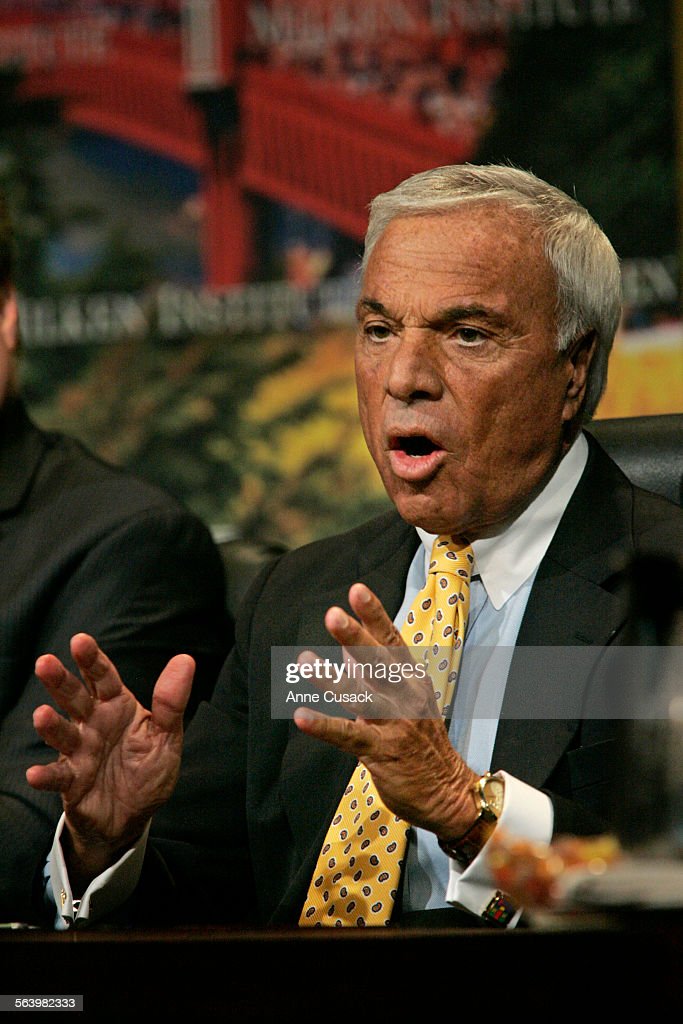
[West Adams] It was this past Monday that I was informed Angelo Mozilo had passed away the previous day. For some he was a visionary, a unique leader, a trailblazer. For others, he was the number one villain for the mortgage collapse of 2008. He was greedy and a manipulator as well as the prime culprit for putting borrowers in mortgages they could not afford, while racking in millions for himself and the companies he operated. No doubt, everyone is entitled to their own opinion. As for me, I have a more positive perspective.
The Beginning
Home ownership was something I took for granted while growing up. It was basic shelter as the process, the financial obligation or generational wealth possibilities were never discussed. As a youngster I always had an interest in business. As an adult my formal education at the university level was marketing. In 1983 we bought our first property, and I was green as the grass outside. The process seemed to take forever and the person helping us with the loan came highly recommended but looking back the service he supplied was pathetic. Yes, we became homeowners but knew nothing about the experience we endured.
In early 1985 my role as a permanent staffer with the Los Angeles Olympic Organizing Committee ended[i] and like many we contemplated our next career move. The HR transition team offered the opportunity to look at those companies who were sponsors. American Express caught my attention. They had a subsidiary called Shearson Lehman and were developing their mortgage unit. I didn’t recognize it at the time, but several other large financial services companies were also jumping into the mortgage market. In addition to American Express, firms like Merrill Lynch, Metropolitan Life Insurance and others were setting up shop. They had a large consumer base, and the strategy was to leverage it with products offered by subsidiaries they created. This was all to create a one-stop shop.
I went through the interview process and became a mortgage banker, a person who sells mortgages to consumers, using relationships with decision makers such as realtors, attorney’s, accountant’s and other professionals. For me, it was an eye-opening experience, and I was on a very quick learning curve.
Even in those days lending was pretty basic. Borrowers preferred a fixed rate loan but at the time rates were in the high teens. Whereas, the one-year adjustable-rate mortgage at 10% that Shearson was offering looked pretty attractive. As part of my marketing efforts, I was active with the Board of Realtors. I recall many top producers who would snicker at this company called Countrywide. In fact, one of the statements used to marginalize lenders or mortgage bankers like Countrywide, Shearson and the like was “we use our own money!” During my first year at Shearson, I would hear more experienced staff mention mortgage brokers. That word was forbidden and was like the kiss of death if ever mentioned. They were considered less than crooks, rip-off artists and the like. It was territory you did not want to venture into. That piqued my curiosity, and I started quietly trying to figure out exactly how they fit in the world of mortgage lending. I came to my senses and realized Shearson was not the fit I projected. While they were a financial powerhouse, their mortgage unit came about by buying a small lender headquartered in the inland empire. Their focus had been traditional conventional mortgages as well government sponsored mortgages (FHA/VA). They were not equipped to handle high-wealth borrowers where underwriting required a higher level of knowledge and sophistication in comprehending their financial documents. My clientele was West Los Angeles including exclusive areas such as Beverly Hills, Brentwood, Hollywood Hills, etc. Even though I was producing loans from this area, just about each one ran into issues.
“Had I known what I eventually came to know I would have selected a more aggressive lender. In doing so, I often quip, I would be rich from the fees I would have earned. Instead I became “broke as a bell glade Indian. It was embarrassing to engage wealthy clients who earned more money in a month than I was making all year, only to tell them they didn’t meet underwriting guidelines.”
Mortgage Brokerage
I rolled the dice and made a quiet exit to explore the myths of mortgage brokerage. I found a new home with a small shop in Torrance. Their production had stalled and needed someone to manage their sales team. It was a short-lived experience, but I learned quite a bit. The owner was eager to turn the company around. I’m a pretty conservative business-oriented person, some might label me as lame! The owner was of Japanese-Hawaiian descent, a nice person. Back in those days marijuana was not legal. He had a penchant as we would go and visit clients to roll-up a blunt and smoke away. It’s laughable when I think about it. I left and in early 1987 felt the time was right to set up my own shop.
Of all the things I learned about how to run a brokerage I was intrigued by how revenue was collected. As a broker you received payment as soon as the loan recorded. Whereas, as an employee such as when I was with Shearson you were paid at the end of the month. This was critical because once I knew legitimate mortgage brokers could get approved, the next hurdle was making sure we had solid points of contacts should any issue arise
Also, during the Shearson days, Countrywide was quietly starting to grow. A recruiter reached out to me to interview for one of the branch manager positions. My heart was set to learn the role of mortgage brokerage, but the experience helped broaden my perspective in lending.
Another noticeable reality was consumer attitudes towards mortgage brokers were shifting. Once I understood the role, how they operated, how they created revenue my thought was “how hard could this be?” My strategy was simple and driven by the service paradigm. Be available and offer clients better service than competitors.
During that time lenders got wind of how brokers were affecting their market and started creating wholesale divisions. Countrywide was no different as they too started courting mortgage broker business.
Countrywide was still considered “not a big-league lender” at least that is what I was hearing at the weekly Board of Realtor meetings. Then something happened! In 1988, there was a monetary crisis and the banks and savings and loans took the brunt of the beating. They were no longer a practical source of competitive mortgage loans. That left Countrywide standing tall as they didn’t require using borrower funds to make loans and out of the darkness they rose in popularity.
As I was setting up my list of lenders I focused on Countrywide. My office was downtown Los Angeles, and they were in Pasadena, so my feeling was any issues were just a quick drive north. This turned out to be a great decision.
Meeting Angelo
We started out as a fledgling company, severally undercapitalized but with big ideas and an aspirational vision on what we might become. Part of running any business is networking. There was a mortgage brokers workshop in Long Beach. If I’m not mistaken it was at the Marriott on Ocean Blvd. I had arranged to meet several prospective lenders and one of them was the executives at Countrywide. I was to meet the head of their wholesale division, Rick Cossano. Once I arrived at the hotel and made the rounds, I started looking around for him. Not knowing what he looked like I ran into a sharply dressed gentleman and asked was he Rick Cossano? He said, “no my name is Angelo Mozilo, but Rick is right over there,” so he took me over and connected us.
That is how it was back in the day as mortgage brokers were trying to get their footing and top executives would frequent these types of sessions. They were looking for consistent brokers to grow their wholesale business and brokers were looking for lenders who could help them grow their originations. As mentioned, in the late 80’s as traditional banks and savings and loan had to take a back seat, lenders like Countrywide changed Realtors and borrower’s attitudes about how mortgage bankers, through legitimate brokers could play a crucial role in providing competitive mortgages. The trick was to not disrupt or jeopardize their existing origination channels.
Angelo Mozilo was a visionary and empowered executives like Cossano to undergird small firms like ours to generate steady production. In the early 1990’s Countrywide’s business was taking off. They developed a national retail network backed by the strategy to brand themselves as the lender of choice. This was coincidental as they also built a solid servicing platform as with originations picked up for most lenders, many found themselves without the ability to service or accept the borrower’s monthly payments. This became a gold-mine for Countrywide as their servicing portfolio was growing leaps and bounds and became a critical marketing asset for them, especially when those customers wanted to refinance their existing mortgage or buy a new home.
In my opinion, another critical benchmark of the consumer mortgage business was Angelo’s leadership and voice to persuade the institutional investment community to change or grow with consumer behavior. Angelo understood the nexus. He took over as president of the Mortgage Bankers Association. Part of his advocacy would help the secondary lenders understand how to create lending programs to accommodate high-wealth clients as well as those with non-traditional income streams. The strategy paid off as production across the board soared to new heights.
Angelo Mozilo was always gracious with us. He implored his wholesale executives to supply whatever support they could legally supply to ensure we were successful. In fact, while attending mortgage broker conventions, it was not uncommon if he was going to be in attendance to direct his staff to allow Judith and I to join him at their table. Make no mistake, I appreciated the generosity but understood the gesture was more of an investment to make sure we consistently produced quality business for them.
1992
In 1992 riots blazed in Los Angeles. It spoke to the inequities some felt as well as the racial animus that created the attitude. Many companies and organizations scrambled to prove they were sensitive to all parts of the community. In the case of Countrywide, they were in somewhat of a pickle. Even though their name had grown as a top lender, the minority community had a different perspective. They felt companies like Countrywide only catered to well-heeled bedroom community clients and certainly offered no presence in their communities. As mentioned, our business was growing. We were housed in the FHA headquarters west of downtown Los Angeles, on the 10th floor. My office faced south, and you could see the smoke and blaze through the windows. I received a call from Countrywide as they needed a minority firm such as ours to offer support or confirm, they were trying to service the community. The publication was the Wall Street journal. From there our relationship grew stronger and stronger as we were able to document borrowers who were now homeowners from the mortgages we originated and sold to them.
The relationship with Countrywide opened many doors. To keep pace, we simply could not produce enough volume needed for the aspiration sought. I could not raise enough operating capital to keep pace. In the middle of 1995, I called our staff in my office and announced we simply were out of gas. That meant closing our doors. Most of the revenue we generated was used to grow our business. We still had personal obligations including raising our family as our oldest daughter was headed to college. In a financial pickle with no source of income I needed to secure employment immediately. Countrywide was our core institutional client, and they needed staff to grow their business. Rick Cossano arranged for Judith and I to be quick hires so we could accumulate paychecks to get back on our feet. It was a humbling experience to walk through the offices at 155 N. Lake. Instead of a high-flyer mortgage broker, I became just one of many thousands of employees.
Initially, I was placed at the 35 Lake building and our unit eventually moved to the main headquarters at 155 N. Lake. It was not uncommon to run into Angelo, although I kept a very low profile. He was a taskmaster who was impeccably dressed and commanded attention wherever he stepped. For many staff and this goes back to our days when we would see him at the mortgage broker conventions, staff was petrified of him. If something was out of place you could count on being admonished. In those days, as for men you had to have a nice supply of quality white shirts and sharp contrasting ties. Luckily for me, I never felt that intimidation, perhaps because we met at a different level. Even still, I always had the greatest respect.
Countrywide was booming. In late 1996 rumors were circulating that Bank of America was trying to buy them. I recall at the Lake headquarters, Angelo called an impromptu meeting in the lobby and the focus of his message was to calm staff, while letting them know the rumor had no validity. By 1997 there was an explosion. 155 N. Lake was simply too small to house the growing giant. Corporate was moved to the former Lockheed headquarters in Calabasas which offered a large campus. Other divisions also found new homes. My unit moved to what was known as “Title Row” based on the substantial number of Title Companies who moved to Rosemead. They had since left but Countrywide quickly filled up a prime spot. Another major relocation was in Plano, Texas as that campus also offered a sprawling campus.
Much has been written about Angelo Mozilo. As the mortgage industry collapsed in the mid 2000’s most of it has been negative and one sided. Some of it provides glee in authors blaming Mozilo for all the world’s ills.
As gifted as Angelo was, he was no magician. He had a vision of opening home ownership to the masses. Yes, this included creating programs were those who had been shut out, for once finally felt they had a chance at the “American Dream.”
Mozilo didn’t create sub-prime lending, or the 125% or any of the products traditionalist define as extreme. Markets change from time to time and there will always be a cadre of lenders offering products, however risky to provide an opportunity to borrowers. In Countrywide’s case it was a double-edged sword. They had built a service business, the envy of the industry. The borrowers were loyal to them but also had needs. As much loyalty they claimed, they understood if Countrywide didn’t offer the product or loan they were seeking, they would have no choice but to leave them. Countrywide and Mozilo knew this and recognized the value they had created in their portfolio so rather than bleed customers to those providing riskier mortgages, they felt they had no choice but to expand their borrower portfolio from “blue-chip” to various levels of creditworthiness and complement it with sub-prime products. Of course, it’s no secret the riskier the mortgage, the more fees or increased revenue is the result. If the treadmill was running smoothly, nobody was hurt and revenues more than justified the risk.
Mozilo tried to stead the ship. Their growth was phenomenal, but the crash eventually caught up with them. They got labeled as the Sub-prime factory of the world but that is not a fair assessment, as that market was just a small part of their overall production.
From the Hero to the Goat
When Countrywide launched in 1969, they quietly took their place as an upstart mortgage banker whose specialty was providing fixed rate mortgages. Over the years they simply outlasted their competition and built an impressive franchise buffered by their servicing division with loan originations coming from their retail and branch network, their correspondent division and their wholesale division whose production had skyrocketed to numbers similar to retail. All of this resulted in the team becoming the number one leader in America. They were the darling of the industry and Angelo’s Midas touch was being handsomely rewarded.
The arrival of the 12 MAT
In 1993, Angelo and the team started a warehouse division which was housed down the street from corporate headquarters called the 35 N. Lake building. They were responsible for bundling and selling the avalanche of mortgage production. This dubious division was called Countrywide Warehouse Company. They were considered an incubator. As Countrywide grew, they grew as well. Once Angelo moved corporate to Calabasas, Countrywide Warehouse moved to the 155 N. Lake building. It was the mid to late 90’s and the dot-com fever was sweeping the nation. Countrywide Warehouse had grown enough to ditch the Countrywide moniker, changing their name to IndyMac. Their focus was doing things outside the lines, taking a revolutionary mindset while creating the tag line, “Bureaucracy Beware.”
It was like the wild wild west. In 1998 I joined another Countrywide subsidiary headed by my friend Rick Cossano called Landsafe Title. I was housed back at the 35 N. Lake building and would visit the 155 N. Lake building to chat with friends or go to the credit union. What I saw was remarkable.
As mentioned, Angelo Mozilo had built Countrywide into a respected powerhouse. Staff were well-dressed and conducted themselves in a manner that would not create ire from Mozilo’s lieutenants or those who might see something unacceptable to the environment created. As mentioned, at Countrywide quality white shirts with nice looking contrasting ties was the norm for men. The upstart called IndyMac who no longer lived under the threat of reprisal from Countrywide had an opposite environment. Again, this was during the dot-com days when offices were being transformed to campuses. Staff worked hard and put in long hours. Their dress was more relaxed plus there were amenities offered to compensate for your time at the office. There were game rooms, lunch/dinner was often brought in and a complete array of services that was a new wave of how professionals operated in a business climate.
Instead of heavily starched white shirts I would see staff in nice-looking polo shirts and matching shorts. On Friday’s staff was treated to beer and other refreshments. On the business side they were building an impressive portfolio catering to mortgage brokers and correspondents. They did not have a typical retail origination channel. To note, there was also a shift in borrowers’ employment and how they received income. Underwriting guidelines had also changed, and risk-based pricing became the norm.
The idea was simple and based on credit scoring. The assumption was correlation between credit score and liquid assets used to support income.
They created a mortgage program which became a breadwinner for the secondary market. It was called the 12 MAT (Moving Treasury Average). The core feature was borrowers were afforded four payments, the least interest only. It was designed for borrowers who had good credit but whose income fluctuated or making it hard to document in a traditional manner, typically those self-employed. As an alternative borrowers could document income by the number of consistent deposits in their banking accounts. The program was not designed for traditional W-2 employees or whose income did not fluctuate. Issues started to arise as the 12MAT became popular and borrowers would boast about only being compelled to pay interest only or the minimum payment, while others were “stuck” with traditional fixed fully amortized payments. Who wouldn’t want to have the lowest payment option? The appetite for borrowers to get the mortgage was ferocious. It became misunderstood and took on a negative connotation as some originators, along with borrower cooperation caught on to guideline of stated income. In other words, if you somehow could document the amount from bank statements you could put whatever income was needed to qualify for the loan. It would later become defined as the “Liar Loan.” As the industry once again shifted in the mid 2000’s, home values stalled, and borrowers could not refinance those mortgages. The walls closed in and eventually the mortgage collapse occurred. Yes, the 12MAT program was the main culprit and yes companies made huge sums of money but there is more to the story than issuing blame.
The Dot-Com crash
In the late 90’s the dot-com era wiped out many dreams. IndyMac was left standing and labeled itself as one of few companies who survived that era. Rick Cossano departed Landsafe in 1999 and I along with several staff who had joined him from Countrywide saw the writing on the wall and eventually left later in the year. I learned later that Indy Mac had created the type of environment which appeared more creative than Countrywide. Long-time Countrywide staff was jumping ship and joining the growth train at IndyMac. Eventually Countrywide management had to place a moratorium and other guidelines on staff movement.
After leaving Countrywide I took a personal break and headed to Chiapas, Mexico and eventually got into spacial photography (think Google maps) and wound up in San Francisco. As I headed back to Los Angeles, I knew I had to buckle down and resume my mortgage career. B2B (Business to Business) was an acronym created from the dot-com era. It was brought to my attention IndyMac was growing a division catering to realtors and it was called Loanworks. I joined the firm and was stunned to see so many Countrywide colleagues. Corporate headquarters had moved from the 155 N. Lake building to a newly reformed campus in East Pasadena. The response I would hear from those colleagues who had left Countrywide was, “this is great, it’s just like Countrywide, just smaller and a nicer environment.”
Like Countrywide, IndyMac was flying high. The year was 2001 and 911 occurred later in the year. In In late 2002 Loanworks had a change in executive management and Mark Mozilo took over the helm. As mentioned, I first met him during the early days of our mortgage brokerage operation. He was also Angele’s eldest son. It was quite a site at IndyMac as even though Angelo was doing his thing in Calabasas, his two sons Mark and Eric, were at IndyMac. Mark and I would have chats how his dad was having fits of how IndyMac staff was dressed while operating a business. Mark would joke how he threatened him that his next move was to grow a beard!
Nothing last forever
In 2005 Mark took on a new assignment. IndyMac bank, which had only one physical location, was growing that division and I was plucked to run the group of loan officers needed to staff them. The reality of the market changing was communicated to be by one of my trainers, Jerry Timpone. A noted real estate guru he would come dashing in my office warning me a wave was headed our way. I shined him on but looking back I must admit how prophetic he was. You could see the writing on the wall that even though we had new branches which were handsomely appointed, production was tough to come by. In mid-2006 Indy Mac stock was at an all-time high. Our division closed. I left and luckily was able to cash in from my 5 years of hard work. Interestingly, as I was wrapping up my career at IndyMac, I received a call from a recruiter encouraging me to entertain a spot at Countrywide. I visited one of their offices at 2 S. Lake and listened to their pitch. It was simple. They had taken off and were on a quest to achieve 200,000 employees. It was appealing but my personality was not to repeat of go back to a company I had left. Judith and I took off for a short trip to Belize.
In 2007, the gig was up. Somehow IndyMac was targeted as the primary culprit of the real estate market crashing. There was a run on the bank deposits. Also, it didn’t help that New York Senator Chuck Schumer went on national television to foment how companies such as IndyMac was a threat to the national economy. Unfortunately, it became the first bank seized by regulators or the face of what was wrong with banking and the mortgage industry.
Bank of America finally got their treasured prize.
As the market continued to implode and a hefty percentage of borrowers could not keep regular payments one by one, they were forced to close. Countrywide was not left unscathed. There was news they needed a cash infusion to mitigate their ability to keep operations. As you might imagine over the years many suitors noticed Countrywide meteoric rise. From my discussions with Mark, Angelo was adamant about not selling as he took immense pride in building an independent company that was number one in the industry.
Bank of America would not take no for an answer. They too were growing, and it was no mistake they have their eyes on Countrywide’s efficient retail branch network as well as their coveted servicing division. A deal was cut. Angelo finally gave in; Bank of America would supply the needed cash and in return they would get the franchise they were licking their chops to obtain.
Implosions continued and foreclosures were spiking at historic rates. Many blamed the collapse on borrowers obtaining mortgages they didn’t understand or simply had too many risks. Of course, with IndyMac already receiving a black eye, it was not surprising to blame the ills of the industry on whoever was not there. In that case, it was Angelo Mozilo who had drifted into retirement after settling regulator’s lawsuits. Sadly, Bank of America tried to defend its purchase of Countrywide by saying they were duped by Mozilo. It was rarely mentioned they had been chasing Countrywide for years. They had bought an albatross which almost took them out as well. Through the years they continued to recover but had a recognizable foil in Mozilo and Countrywide. They would become the negative eyesore of any issues Bank of America would have to confront. With the purchase of Countrywide, Bank of America absorbed a large percentage of their staff. Many had started their tenue in the early 2000’s and they quietly took their place and had to accept the narrative that was communicated about Countrywide. It became quite a talking point as over the years employees had been transformed to speak negatively about Countrywide and their standards and work-ethic, or lack thereof, at least from their perspective. Perhaps they had forgotten the positive things they experienced at Countrywide? Many lacked the depth or perspective of mortgage lending or didn’t care about history, as for them it was simply just a job. Industry-wise, Bank America was not a player in the mortgage business which makes you wonder why the purchased Countrywide in the first place? Of course, as the story unfolded some will say they were forced into it. Their core business was banking but, in the end, they were able to merge what was left from Countrywide’s assets into their own. Nevertheless, it was still puzzling for me to hear from colleagues what I thought should have been a more honest assessment.
It was an unfortunate legacy that Angelo and his family had to live with. Countrywide and Bank of America were two separate organizations. Again, Countrywide built a reputation as a trailblazer while Bank of America was known as a “button-down” shirt type of company, taking extraordinarily negligible risk while growing its network through acquisitions.
No lie can live forever.
I always respected how Angelo Mozilo grew his company. Some of it, I saw first-hand. As outlined my perspectives are not based on something I read. Admittedly, to see the downfall of his beloved Countrywide was painful to see. In the early teens of 2000, my sights were set on winding down my career so I could head into retirement and tackle the many personal projects I had assembled. Bank of America had stabilized and ever since leaving IndyMac my focus in staying in the industry was to seek out opportunities to use my experience with different departments. Due to the real estate meltdown compliance groups were growing and I projected that would be a nice landing spot to fade out. I was contacted by one of my recruiter contacts informing me of a new opportunity at Bank of America at their Calabasas campus. I joined the newly formed team, and the rest is history. While the work and new discipline in Compliance was challenging, it was painful if not at times irritating when speaking to various colleagues. It seemed those at Bank of America were in a trance, let alone have any depth or understanding of the mortgage industry. Most bought lock, stock and barrel the notion that Angelo Mozilo was some type of villain and Countrywide was one of the worst-run companies on the planet. The attitude was like that of a cult. They didn’t want to hear how Angelo was a visionary. How he changed underwriting guidelines. How he supplied opportunities to homeowners like nobody before him, on and on. Whenever the name Countrywide would come up, all I would hear was how they almost took down Bank of America. There was never any mention of how it was Bank of America who was chasing Countrywide.
During my years at Bank of America, my writing was noticed, and I became a writer for several digital publications to focus on the mortgage industry. This was more of a side gig as I was committed to Bank of America during the day as a full-time staffer. One caveat I had to adhere to when publishing my articles would be not to mention Countrywide or Bank of America. In 2017 I was finally set free as I left Bank of America and no longer bound to keep quiet.
Like most of us, there are good parts and there are bad. The Angelo Mozilo I knew was a trailblazer. The positive things he did while living is noteworthy, and nobody can tarnish that reality. Yes, he was the co-founder of Countrywide and responsible for their record growth as well as their eventual demise but in the game of life you don’t have to bat 1000%
RIP Angelo Mozilo – unlike some, you at least tried.

 Thomas Reports