Mortgage rates jump to highest level of 2018


The news is not enough to create panic but mortgage rates reached their highest level of 2018 and now sit at 4.470%.  That is the rate reported by Freddie Mac from their weekly primary market rate survey, which is the industry standard for gauging consumer mortgages.  It represents the benchmark thirty-year mortgage.  The survey is compiled from a sampling of lenders who sell mortgages to them.

The increase represents a five-basis point increase from week over week reporting.  Among other things the rate increase is attributed to the uncertainty over the impact of tariffs which the Trump administration recently announced.


Most consumers understand mortgage rates are cyclical and even the five-point increase would be considered normal movement.  On the other hand, those in the market for a mortgage pay attention to trends as positioning is a big factor in determining when to apply for a loan.  Purchase transactions are driven by the close of escrow and refinance transactions take approximately sixty days to close.  So, if the assumption is that rates will further increase it is more prudent to lock in the rate at time of application.  Of course, if your analysis conclude rates might drop, then your strategy might be to submit your application but “float” the rate or lock in at a later time.


Tax Cuts


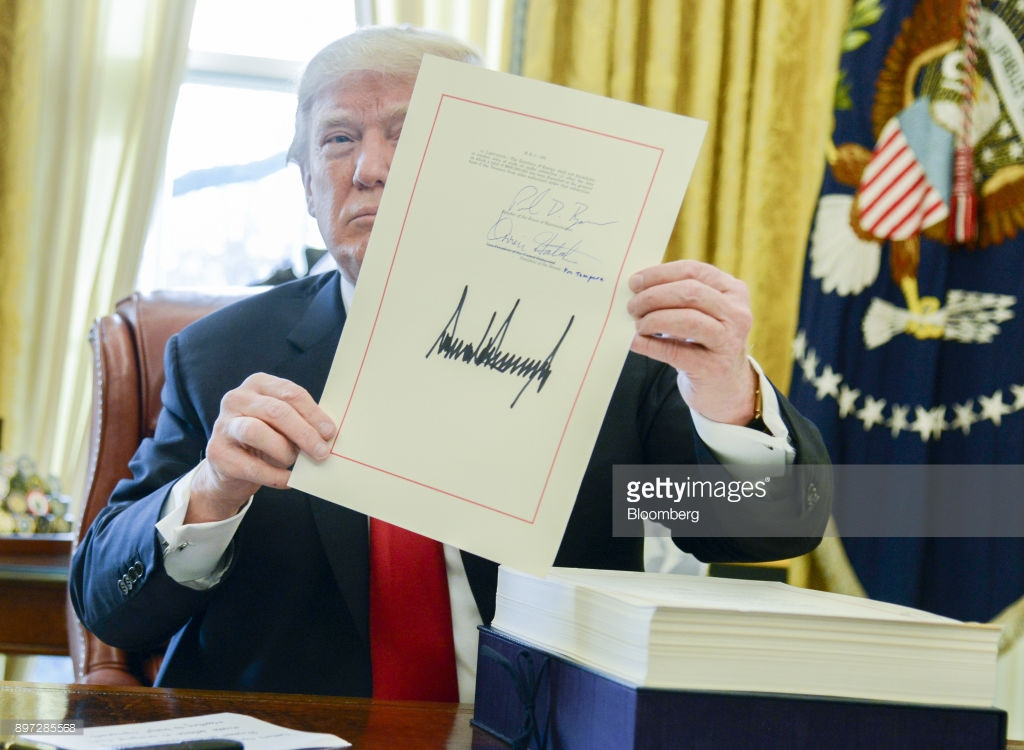
The financial projection for 2018 was that rates would increase from their 2017 level.   There was much fanfare about the historic tax bill which was passed in December 2017.  Hopefully you were lucky enough to receive bonuses touted by the majority political party as well as Donald Trump?

“Still, the vast majority of adults don’t seem to have sensed the effects of the tax cut on their personal finances.” Politico

Although the public still hasn’t been told of how the government plans to pay for the tax cuts which by 2020 will push the tax deficit pass the TRILLION-dollar mark, many have taken the position to support anything which puts a little money in their pocket, even on a temporary basis.

Donald Trump proclaims tax cuts will revolutionize economy. Some are still waiting on promised bonuses or larger paychecks.

Expect Mark Short to be taken to the woodshed

Perhaps he misspoke but later this week do not be surprised if Trump and his strong allies do not take one of their own directly to the woodshed.  Why?  There was so much hype in attempting the justify the tax cuts and/or more money in worker’s paychecks, one would surely assume the numbers would be more than five percent!!!!

However, contrary to what the Trump administration has been boasting their own Director of Legislative Affairs and Assistant to the President for U.S. President Donald J. Trump, Mark Short belted out on “Meet the Press” that there is good news as five million people have financially benefited from the tax bill passed in December.  The problem with Short’s assessment is while five million represents lots of folk, it represents less than five percent of the total workforce which is nearly 125 million, as reported by the Bureau of Labor Statistics.  Wasn’t it presented that nearly every worker would see an immediate gain?  Maybe you were one of the lucky five million?

Hear Short’s specific comment at the 40 second mark.


Cost of good increase


Everyone appreciates a good economy.  The result is consumer confidence has increased and that is a positive sign which doesn’t get much debate..  The impact for most consumers is even though they have more money in their pocket, the increased cost of goods has eaten away at those gains.

People take part in a protest against the Republican tax bill in Los Angeles, California on December 4, 2017. Democrats and many economists warn that the GOP tax plan gives large tax cuts to corporations and the wealthy and will hurt middle class families. (Photo by Ronen Tivony/NurPhoto)

On the mortgage front today’s rate represents a fifty-basis point increase from year over year reporting.  The result is the average consumer ($244,000) is paying an additional $102 per month over a tad over $1,200 for the year.  Based on those numbers you will need more than a tax cut or bonus to break even.

Current rates for popular programs**

April 19, 2018

30-Yr FRM 15-Yr FRM 5/1-Yr ARM
Average Rates 4.47 % 3.94 % 3.67 %
Fees & Points 0.5 0.4 0.3
Margin N/A N/A 2.76

** source – Freddie Mac rate survey

Federal Reserve pulls the plug – rates move higher


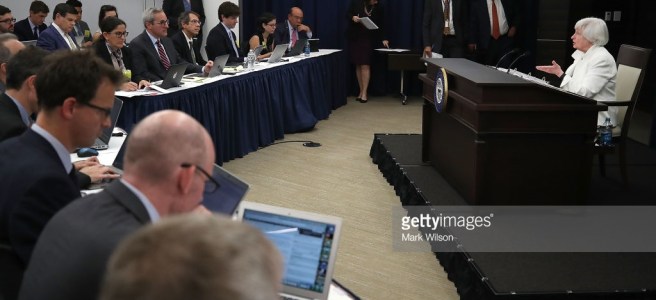
Jerome Powell holding press conference following FOMC meeting. Generated by IJG JPEG Library. Getty Images

After approximately two months since taking over the helm as the chairman of the Federal Reserve, Jerome Powell announced a rate increase.  The move was expected as while rates are cyclical they are based on a variety of economic factors.  Powell and the rest of the board agreed recent unemployment numbers, household confidence and the positive direction of the economy provided justification of moving the rates one-quarter of a percent or to the highest level of the year at 1.750%.


The formal announcement via a press conference followed the Federal Open Market Committee (FOMC) meeting held earlier today.  The vote was unanimous as all members of the FOMC voted to increase the rate.


“The Committee expects that economic conditions will evolve in a manner that will warrant further gradual increases in the federal funds rate; the federal funds rate is likely to remain, for some time, below levels that are expected to prevail in the longer run. However, the actual path of the federal funds rate will depend on the economic outlook as informed by incoming data.”  Federal Reserve.


The Federal Reserve is responsible for U. S. monetary policy and when there are positive economic signs, rate increases are a necessary buffer to control inflation or other negative impacts.  During the press conference, Powell mentioned at least two more rate increases are scheduled for 2018.

The fed rate is related to what banks are charged to obtain funds.  

Mortgage rates show no sign of let-up – Keep rising


Employee Rhonda Lawson works in the customer call center area at Freddie Mac headquarters in McLean, Virginia, U.S., Photographer: Andrew Harrer/Bloomberg via Getty Images

[McLean, VA]  For the eighth consecutive week mortgage rates have continued their climb.  Now at 4.40% which is just two basis points in week- over-week reporting, it represents the highest mark of 2018.  The increase did not catch anybody off guard as the 10-year Treasury climbed over 2.90%.   The 10-year Treasury is known as the long-term index which affects mortgage rates.


Going forward, rates are projected to keep climbing.   Also, based on economic movement experts have suggested the Fed is positioned for three and perhaps four discount rate hikes for 2018.  This is designed to counter inflationary worries and keep the economy in check.


Consumers haven’t pushed the panic button as when evaluating year over year data, mortgage rates have only increased fourteen basis points.  That difference is well within the range of mortgage rate movement as they are very cyclical.

Rate recap for the week:

February 22, 2018

30-Yr FRM 15-Yr FRM 5/1-Yr ARM
Average Rates 4.40% 3.85% 3.65%
Fees & Points 0.5 0.5 0.4
Margin N/A N/A 2.75

Freddie Mac known technically as Federal National Home Loan Corporation purchases mortgages from it approved mortgage originators.  The primary market rate survey is the industry standard published weekly and is used by consumers and industry experts to gauge rate movement.


Mortgage rates keep climbing


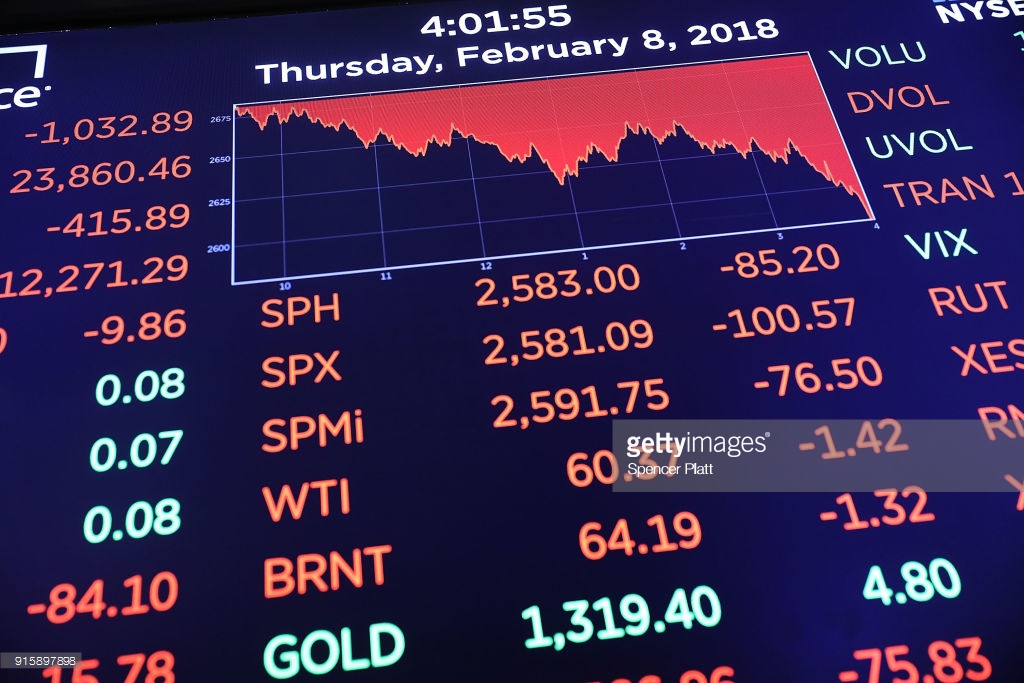
This has been a tough week for the stock market.  One that many say is a long-overdue correction.  On the mortgage front rates continue to climb as this week they jumped 10 more basis points and now sit at 4.32%

  Generated by IJG JPEG Library

Most consumers understand rates are cyclical and are not stagnant so it is not uncommon for them to move up and down.  What is alarming may be ever since the tax cut was announced as well as the subsequent news major employers would be granting bonuses, they have climbed nearly ½ point.  The number may appear insignificant but with all of the hoopla of the benefits of the tax break to “regular” people it is worth noting the increase in rates have translated into higher cost or more payments.  Specifically, with mortgages, the impact is approximately $44 more each month.  The soundbite that you will see more money in your paycheck starting around February may be true but the reality is if you are in the market for a mortgage, you will need it!


While the increase in rates was projected, it shows why you need to be laser focused on the details especially if you are in the market to obtain a new mortgage or refinance your existing one.  If that is you, positioning continues to be the name of the game as the slightest hesitation can be costly.  Perhaps that explains why mortgage applications are also rising because with normal closing times projected from 45 to 60 days, you don’t wait for rates to rise through the roof before you finally decide to start the application process.


While the drop in the market has some concerned, the bigger issue is whether the Feds will increase the discount rate to tamp down on inflationary concerns?


Here is a recap of this week rate survey

30-Yr FRM 15-Yr FRM 5/1-Yr ARM
Average Rates 4.32% 3.77% 3.57%
Fees & Points 0.6 0.5 0.4
Margin N/A N/A 2.75


Freddie Mac produces the weekly rate survey.  Data is comprised from a pool of its lenders and the information is used to gauge movement and provide a target of interest rate movement.

Yellen gives up gavel, mortgage rates continue to climb


Yesterday Dr. Janet Yellen chaired her last fed meeting of the Federal Open Market Committee.  The committee is part of the Federal Reserve leadership and they chose to keep rates unchanged.  Dr. Yellen passed the gavel to Trump nominee and incoming chair, Mr. Jerome Powell.  Yellen is an Obama appointee and since 2014 has served as chair.  The move was expected and even though the discount rate did not change there is speculation for increases as we move into the year.  The economy continues to move in a positive direction and it is the Fed’s mandate to manage monetary policy.

Mortgage

On the mortgage side of consumer finances, the benchmark 30-year fixed rate mortgage continued to rise.  In week over week reporting from the Freddie Mac primary market rate survey rates moved up seven basis points to 4.22%.  The increase in rates was expected based on economic conditions.  While consumer confidence also continues to improve the jump in rates affects affordability, especially for those on the margins where qualifying for a mortgage could be trickier.


Seven basis points represents almost 1/8th of a percent and while the movement is up there is no need for alarm as movement is based on a normal cyclical flow.  As a comparison in year over year reporting, this year’s rate of 4.22% is just three basis points from last year which was 4.19%


Snapshot of popular programs

February 1, 2018

30-Yr FRM 15-Yr FRM 5/1-Yr ARM
Average Rates 4.22% 3.68% 3.53%
Fees & Points 0.5 0.5 0.4
Margin N/A N/A 2.75

Both mortgage rates and applications jump


This morning the benchmark 30-year mortgage jumped eleven basis points and came in at 4.15%.  Likewise, mortgage applications also increased almost five percent from week over week reporting.  As the economy continues to pick up steam consumers can expect to see rates increase accordingly as they are cyclical in nature and move based on a variety of economic factors.

Also, it is noted consumer confidence has improved.  Combined with the heralded tax cut and the recent announcement of companies providing bonuses to employees, the result is more household cash to work with.  Some analyst caution the giddiness being reported about the bonuses and cuts.  Just this morning Home Depot joined the list of companies who will provide bonuses to eligible staff to the tune of up to $1,000.  For most, the additional cash might seem like a great windfall but in the larger picture higher interest rates or higher cost of goods will reduce perceived savings.

Short term gain, long-term loss

Could the tax cuts touted by Donald Trump be another one of his “slight of hand” hustles?   Throwing a bone to average people, while he and his elite group escape with the real riches?

Let, take a look.  As an example, assuming a mortgage of $200,000, prior to the tax cuts rates where around 3.90%.  Compared with today’s mortgage survey release of 4.15%, the difference is 25 basis points here is the bottom-line.


3.90% principal and interest  = $943

4.15% principal and interest = $972

The difference is a motley $29 per month which seems nominal.  However annually it is $348 and factoring seven years (which is the average time consumers keep their mortgage) the result is $2,436.  So, while the bonuses are great in today’s dollars, it is more than wiped out based on higher cost.


Short term gain, long-term loss

There is a long-standing political debate on what effect the tax cut has for the “average” family that typically lives paycheck?  No doubt in the capital society which we live in it is great to receive extra money such as bonuses or tax cuts, however the issue for many is sustainability or how long it will last?


The jump is interest rates is one sign attributed to the increase in mortgage applications.  On one hand consumers may have extra money but on the other hand those who are in the market for a refinance or new mortgage realize any delay in making an application or locking in a rate may subject themselves to higher movement or additional cost to their budget.


The mortgage rates which are reflected are from the Freddie Mac weekly rate survey.  The mortgage application data is from the Mortgage Bankers Association from the “Mortgage Application Weekly Survey.”


Rate recap

January 25, 2018

30-Yr FRM 15-Yr FRM 5/1-Yr ARM
Average Rates 4.15% 3.62% 3.52%
Fees & Points 0.5 0.5 0.4
Margin N/A N/A 2.75

Mortgage rates climb above 4%


For the first time in eight months mortgage rates have climbed above the 4% threshold.  The news was expected as financial markets continue to post positive numbers including improved business and consumer confidence.

Lenders who fund mortgage applications typically offer rates in a range based on various factors.  Today’s report is from Freddie Mac’s primary market rate survey.  It is the industry standard used to gauge rates and the data is compiled from a sample of lenders who sell their closed mortgage loans on the secondary market.  This week’s rate is 4.04% and is based on the benchmark thirty-year mortgage.


While mortgage rates inched higher they stil make home ownership affordable.  At the same time consumers realize timing is everything and as overall economic conditions improve, increases may be the result.


Current snapshot of rates

January 18, 2018

30-Yr FRM 15-Yr FRM 5/1-Yr ARM
Average Rates 4.04% 3.49% 3.46%
Fees & Points 0.6 0.5 0.3
Margin N/A N/A 2.74

source:  Freddie Mac Rate Survey

Fed raises rate a quarter of a percent


[Washington, D.C.]  In its last meeting for 2017 the Federal Reserve’s Federal Open Market Committee (FOMC`) agreed to raise the discount rate from 1.250% to 1.500%.  The move was expected and based on the health of the economy and the unemployment rate falling, if not holding steady, the Fed’s felt the move will benefit the economy in the long run.  It was also mentioned the move is designed to thwart inflation and keep it no higher than two percent.


“The stance of monetary policy remains accommodative, thereby supporting strong labor market conditions and a sustained return to 2 percent inflation.”  FOMC


Two dissenting votes


On the nine FOMC voting members, surprisingly there were two who voted against the increase due to concerns of maintaining the existing target.

.

Voting for: Janet L. Yellen, Chair; William C. Dudley, Vice Chairman; Lael Brainard; Patrick Harker; Robert S. Kaplan; Jerome H. Powell; and Randal K. Quarles.

Voting against the action were Charles L. Evans and Neel Kashkari.

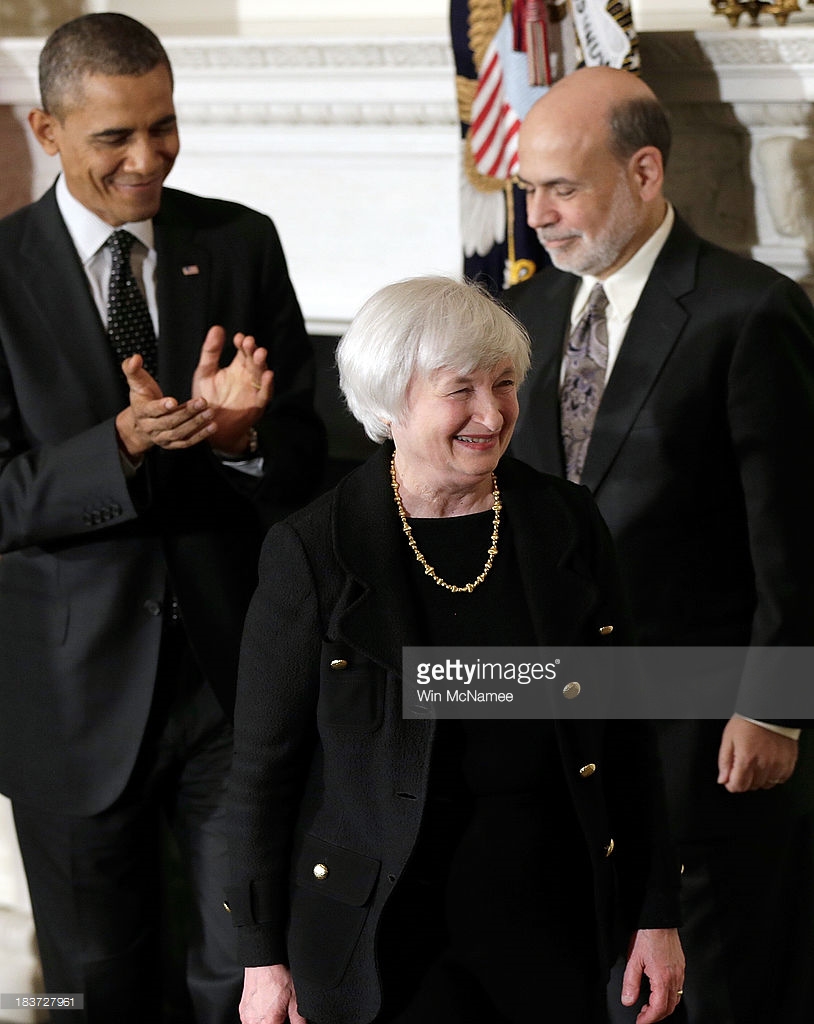
Janet Yellen:  time to move on


Today, Donald Trump appointed Jerome Powell as the next chair of the Board of Governors of the Federal Reserve system (Fed) replacing Janet Yellen.  The announcement was expected as Powell must now prepare himself to go through the gauntlet called confirmation.  Since he is already part of the board there should be no surprises and he is expected to be in place when Yellen’s term ends in February.

“I congratulate my colleague Jay Powell on his nomination to be Chairman of the Federal Reserve Board. Jay’s long and distinguished career has been marked by dedicated public service and seriousness of purpose. I am confident in his deep commitment to carrying out the vital public mission of the Federal Reserve. I am committed to working with him to ensure a smooth transition.” Janet Yellen, 11/2/17


Yellen was appointed as chair by President Barack Obama in 2014 and her term officially ends February 3, 2018.

Generated by IJG JPEG Library

Prior to taking over the chair’s functions she was second in command under then Fed chair Ben Bernanke.   Many in the financial sector applaud her tenure as being a steady force in guiding the United States monetary policy.  Even though the position is supposed to be non-partisan, her primary criticism came from those on the opposite side of President Obama who took fault with anything and everything he proposed.  Yet, like most things history has the final say and the economy is in much better shape as she exits – stage left!

Not fake news

Her critics and several others have short memories or blatant amnesia as they forget about a decade ago, the United States economic condition was becoming quite perilous and eventually exploded in 2008 resulting in hardships for millions of citizens and people around the globe.  It was through focus and commitment that Bernanke and his team as well as the leadership of President Obama who accepted the daunting task of stabilizing the markets.  The rest is history and the residual effect is an economy which has regained its footing, including a stock market which has grown to unprecedented levels.

Fed rate remains unchanged

Yesterday the Fed’s Monetary Committee met and decided to maintain the fed discount rate, although it is still projected to increase before the end of the year.  The concern conveyed by members was acknowledgment the economy is moving is a positive direction.

As Yellen is preparing to move on the one concern being voiced is the GOP’s proposed tax reform bill.  Monetary policy is a methodical process and it takes extreme discipline to not allow partisan politics to be the guiding force to ensure normalization.


“That task could be complicated  by the GOP plan to inject huge stimulus into an already-healthy economy. Doing so may force the Fed to more aggressively raise rates to prevent the economy from overheating. “

Mortgage rates jump on speculation of a tax deal


It was in the middle of July when mortgage rates were at 4%.  Based on yesterday’s mortgage rate survey the benchmark 30 years mortgage jumped six basis points in week over week reporting and came in at 3.960%.  Most know rate movement is cyclical so the increase must be viewed  based on trends not as an isolated incident.

Industry experts attributed the jump to the increase of the yields on the 10-year Treasury bond, which jumped nearly 10 basis points.  The 10-year bond is the primary indices which affect movement on the 30-year mortgage.


The markets reacted based on anticipation that a tax deal may be accomplished?  Also, yesterday the Senate passed procedural regulations  known as a budget resolution making it a bit easier for a deal to be reached.   If things work out as projected, it would mark a key win for the Trump administration which has been bogged down since taking office by not being able to tout any legislative victories.


In the meantime, homeowners who are purchasing a property or attempting to refinance their existing mortgage are gauging rates to make sure their budgets are not negatively impacted.

Here is a snapshot of this week’s rates:

October 26, 2017

30-Yr FRM 15-Yr FRM 5/1-Yr ARM
Average Rates 3.94% 3.25% 3.21%
Fees & Points 0.5 0.5 0.4
Margin N/A N/A 2.74

The Freddie Mac rate survey is published every Thursday.  It is an industry standard and used to gauge mortgage movement.