[Expo Park – Los Angeles, CA] Last Thursday the California African-American Museum hosted the final symposium series on gentrification. The event was created by Karen Mack of L.A. Commons. “Evolution of View Park: Making Sense of Gentrification” featured great audience participation, some solid questions and an excellent presentation.
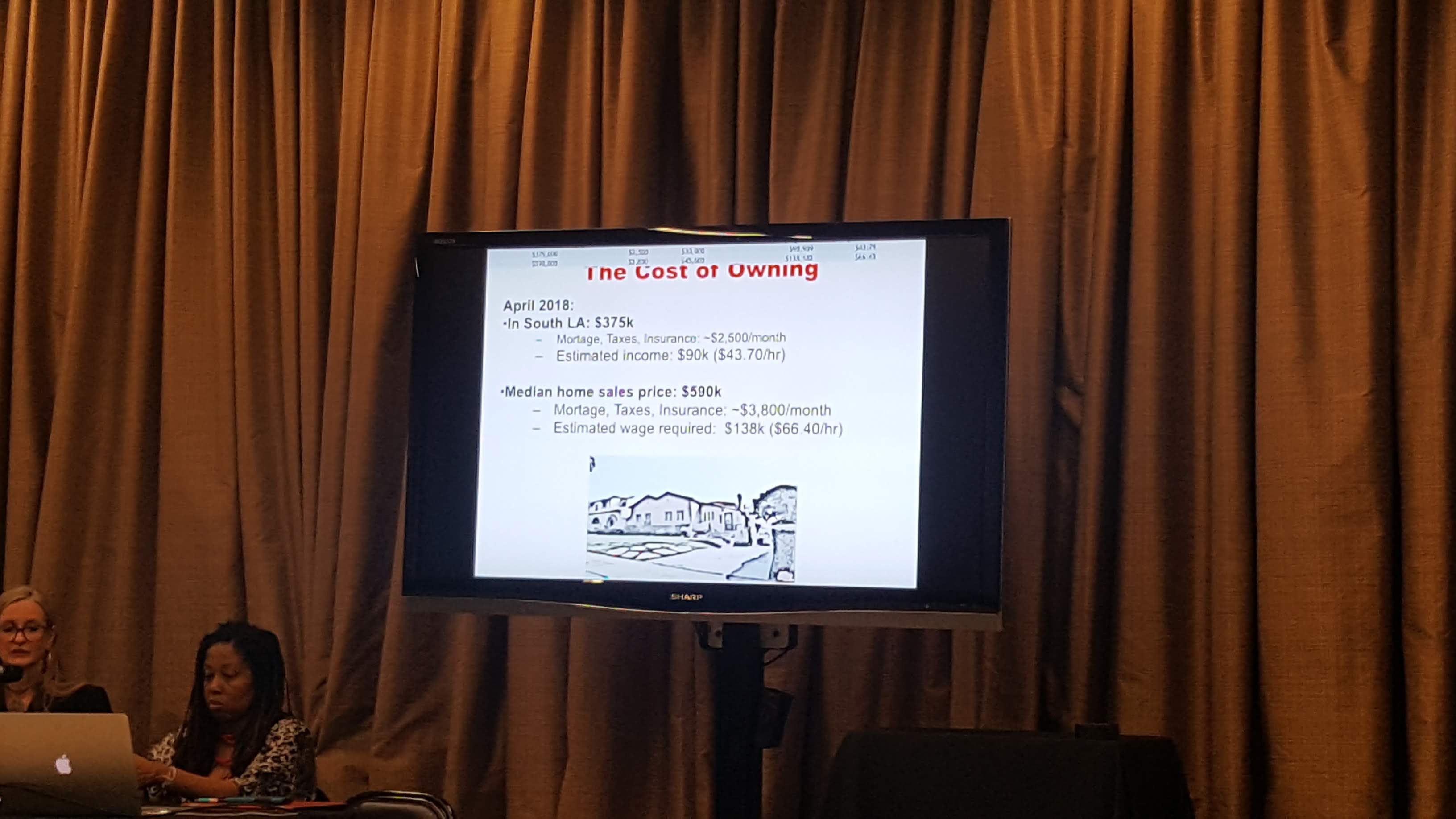
South Los Angeles is ripe for gentrification as the average home price sets at $375K
Complex topic
As mentioned in previous articles on this series; the gentrification topic is very complex and one that can be quite emotional in discussing, particularly from the brave souls in attendance who offered compelling anecdotal commentary. These types of events are eye-openers as the commentary offered by the audience oftentimes transforms into a venting session which is necessary to put the topic front and center. However, it can be precarious as the venting can go on and on…….leaving very little room for solutions based strategies to be communicated.
“This series has been so successful Karen should take it on the road” Robert Lee Johnson, Community Author
The event started at 2pm and once again the venue was packed to the brim. As predicted due to the primary area of discussion; View Park, the majority of those in attendance were African-American.
Crack epidemic in the 80’s
The civil rights movement of the 1960’s as well as the dismantling of racial covenants which previously kept African-Americans from moving into certain communities was critical as there was an increase in the movement towards achieving middle class status through home ownership.
Families grew at an impressive clip. What gets lost in the whole gentrification discussion, particularly trying to answer the question of if certain neighborhoods or property was hard to achieve why did some of those same families leave and flee to the suburbs and other areas? For those who cherish Ronald Reagan as an icon of growth while perpetuating the “American dream,” those from the African-American communities have a different perspective. It is well documented funds needed to fight the Nicaraguan war as well as other conflicts in Central and South America came from the purchase of the readily supply of cocaine. The product found haven in urban centers across America. The result was turf battles, killings and other negative consequences which dismantled neighborhoods that were once beacons of progress and hope. As those areas decayed, it became ripe for reinvestment to replace current occupants.
Legacy and affordability
A key theme or issue which many were seen nodding their heads in agreement was the notion that offspring of those who purchased property in the 60’s, 70’s, 80’s and beyond have great difficulty in being able to purchase their own home, today! While that is a statement many seem to affirm, it raises many questions. Did those parents who originally purchased home not do an adequate job in helping their offspring achieve financial literacy? Due to their successes, did they seem to project a road that their offspring would not have to work or sacrifice like they did? Why do they assume their offspring cannot qualify for financing, while admitting their incomes are perhaps higher based on the age they first purchased? It is more complex then assessing those who grew up in the area cannot afford the very area they grew up in.
Reverse racism?
The interest in the symposium topic was obvious based on packed crowds at each event. There was a strong sentiment of how homeownership was achieved and how it was critical for them to create a legacy for their heirs. More important was the need for African-Americans to maintain those neighborhoods.
United States history is ripe with laws, regulations, discrimination and other tactics to deprive groups such as African-Americans from owning property or relegating them to specific communities. Some in attendance were quick to point out their pleas to keep neighborhoods in the hand of African-American should not be construed as defining them as racist. Technically that would be impossible as racism is using race to oppress other ethnic groups. African-Americans are not creating any laws or systemic maneuvers to keep any out.
Solutions
As mentioned due to the venting there was more assessment of the problem versus solution. However, that is to be expected as what Karen Mack organized was a starting point to discuss the issue and that is crucial for stakeholders to speak to their issues.
One important theme offered by those presenting possible solutions was the need to become organized and take a more active role in legitimate organizations.
Due to time the event had to conclude but many in attendance committed to taking this discussion offline and continue to address issues to combat the negative reality of gentrification.
Readers are encouraged to educate themselves on this topic. Karen Mack may or may not agree to a road show, in the meantime those interested must stay engaged in community platforms such as the one which brought folk together for this series.
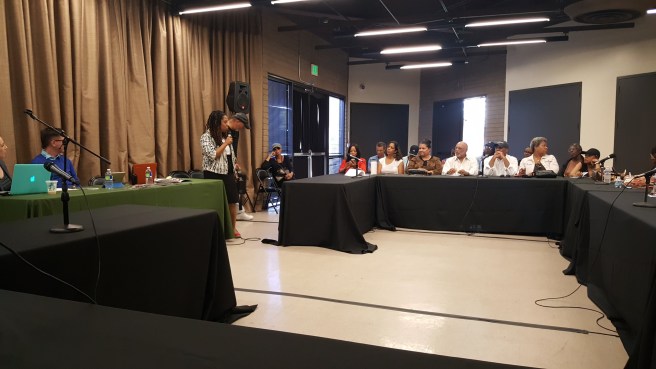
[Exposition Park – Los Angeles, CA] This past Thursday the California African-American Museum (CAAM) hosted L.A. Commons and Mrs. Karen Mack in a community symposium titled the “Evolution of View Park.” This was the second of a three-part series focusing on “Making Sense of Gentrification,” highlighting the community of View Park (Los Angeles), CA.
Mrs. Karen Mack welcoming attendees. photo courtesy of fredyt123
A standing room crowd came out to hear and discuss what is one of the hottest topics in the past twenty years. Gentrification is not an easy topic to discuss. The word evokes emotion and for many has a negative meaning. Although from my lens those in attendance were predominately African-American, homeowners and female, for the most part there was a good degree of diversity from other ethnic groups. What also made for a good discussion was the span of age groups. In addition to the focus on View Park, some who have called the community home represented multi-generational families. You also had representation from neighboring communities such as Baldwin Hills, Leimert Park, West Adams and Venice, just to name a few. Additionally, there was representation from cities such as District of Columbia, Baltimore and other cities on the east coast. Sprinkled in the audience were a few millenniums who were courageous to share their perspectives.
Mrs. Mack brought quite a team to inform those in attendance but to also motivate dialogue which is essential in fostering honesty about the subject matter. She was joined by economist Dr. Devin Bunten who has researched the effects of gentrification throughout communities in the United States. The data he was able to cull together to add to his presentation was unapologetic as it was supported by solid documentation. This helped the audience frame a better understanding in answering the What and the Why, as well as the How of Gentrification.
View Park and neighboring Windsor Hills are just two enclaves where today African-Americans maintain over 70% occupancy. They are treasured communities due to property type and proximity.
Also, joining Mrs. Mack was local community historian Mr. Robert Lee Johnson. The grassroots work he has done was well received because he was able to dig back to the evolution of various communities and discuss how they have come to define themselves in 2018.
Lee pointed out how African-Americans migrated from the south. For housing they were relegated to Central Avenue or the “eastside.” Legal segregation was a reality. However, as legal victories were achieved in the 60’s and racial property covenants were ruled unenforceable, African-Americans were afforded housing opportunities that those before them could not enjoy. Many find it hard to believe that Compton, CA was once all white!
Those who were stacked in the Central Avenue corridor took advantage of the legal victories and moved in all directions. Some went west to West Adams, Leimert Park as well as View Park and Baldwin Hills.
The motivation
Gentrification primarily occurs in the urban core and surrounding communities. Communities such as View Park are desirable for a variety of reasons. As beautiful are these areas are, for those looking to move closer to the urban core they must contemplate life in a more multi-cultural environment versus an area they may have grown up in, such as the Westside or other bedroom communities in the suburbs.
By selecting to relocate patient buyers are rewarded with savings in the hundreds of thousands of dollars. The biggest issue they face in coming to the new community is the realty of instead of being in the majority, they find themselves in the minority. Also, part of their acceptance in relocating is understanding services they have come to accept, might be lacking in the new neighborhood, however they can be transformed. Blending those needs into their new community is one of the biggest challenges of gentrification. That is, making sure the new services are appreciated by the current residents so they don’t feel like outsiders.
After the presentations those in attendance came prepared to ask questions and provide their anecdotal realities. The discussion was very candid and became quite emotional. Some felt the current gentrifi’ers are more like invaders.
“THEY WALK THE NEIGHBORHOODS WITH THEIR DOGS AND TARGET PROPERTIES WHICH ARE VUNERABLE, PARTICULARLY WHERE SENIORS MAY BE LIVING ALONE”
“THEY COME TO THE COMMUNITY WITH A HAPPY FACE AND BRING COOKIES AS A RUSE TO DEVELOP FRIENDSHIPS BUT THE REAL MOTIVATION IS TO GET THE HOMEOWNER TO FEEL COMFORTABLE IN DISCUSSING PURCHASING THEIR HOME.”
“THEY WORK WITH LOCAL CODE ENFORCEMENT AGENCIES WHO SCOUR COMMUNITIES LOOKING FOR VARIOUS VIOLATIONS WHICH RESULT IN THE CURRENT OWNERS FEEL THEY ARE HARRASSED. OR THEY RECEIVE FINANCIAL PENALTIES WHICH JEOPARDIZE THE CURRENT OCCUPANTS ABILITY TO PAY.”
“WHILE EVERYONE WANTS A POSITIVE COMMUNITY, THOSE WHO ARE ABLE TO MOVE IN HAVE THE FINANCIAL RESOURCES AND POLITICAL VOICE TO MAKE IMPROVEMENTS THAT CURRENT OCCUPANTS MAY HAVE LACKED. CONSEQUENTLY, AS COMMUNITIES ARE ENHANCED AND DEVELOPED THE RESULT IS HIGHER TAXES WHICH THREATENED CURRENT OCCUPANTS BASED ON THEIR INABILITY TO HAVE THE INCREASE IN INCOME NEEDED TO REMAIN IN THEIR PROPERTIES.”
“THERE IS GREAT CONCERN CURRENT FAMILY’S WILL NOT BE ABLE TO SUSTAIN A LEGACY FOR THEIR CHILDREN AS BASED ON THEIR FINANCIAL PLIGHT, BATTLING RACISM AND OTHER SYSTEMIC ISSUES MAKES IT VERY HARD FOR THEM TO BE ABLE TO AFFORD THE WAY THEIR PARENTS DID.”
The majority of issues raised by the audience was well received as you could see many heads nodding in approval. At the same time, some issues were like self-inflicted wounds as some claimed to be unfairly targeted or harassed. Based on what they were representing their behavior is the type that falls prey to being targeted. Illegal add-ons or other enhancements which might have made the property more livable, in fact are out of code. The result may lead to financial penalties or decrease in value based on what they represent their properties to be. The key, and most homeowners understand this, is to make sure their property is within code or not a target from any scrutiny, let alone a gentrifier who may feel their property is a potential purchase.
The bottom line is Mrs. Mack provided an opportunity for folk to gain information, network and become more empowered. Gentrification may have a negative connotation but understanding how it works is essential so that one has a workable answer why and how groups are reclaiming parts of the city. In the meantime, while people continue to move or relocate for a variety of reasons, much of it justified, those who remain are encouraged to take a page from the 1960’s which saw one of the early migrations of folk leaving the city for what they perceived as “greener pastures.” Don’t Move! Improve!!!
A Historical Perspective:
Racism, White Flight, Gentrification
As mentioned Racism, White Flight and Gentrification are words many have a difficult time discussing.
Racism is not a new clothing line! White Flight is not a new dance step! Gentrification is not a new gelato flavor!
Racism is a by-product of white supremacy. Gentrification is the reverse of White Flight but still a by-product
Racism was most attributed to those who identify as “white” and whose ancestry is primarily European. A construct or a system was created where their race was used to dominate other races and otherwise maintain superiority over others through oppressive tactics, hence the birth of white supremacy.
“IF YOU’RE WHITE, IT’S ALRIGHT……IF YOU’RE BROWN STICK AROUND….IF YOU’RE BLACK GET BACK!!”
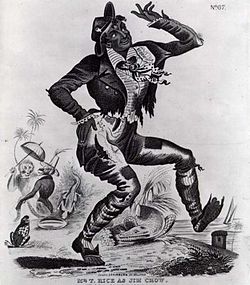
the original jim crow character. It became the symbol of institutionalized racism in the united states
Racism became a world phenomenon as whites used their domination to conquer many ethnic groups. The result was colonization. Over the years some may have thought racism was eliminated by groups reclaiming their cultures, however EVEN in 2018 it still festers in our overall society and is quite prevalent.
Many voting age African-Americans had accepting the notion in their lifetime a fellow African-American would never ascend to the office of President. That is why in 2008 they were happily stunned when Barack Obama was elected the 45th president. Likewise, as long as racism has been around many feel it will not be eliminated in their lifetime.
“When we discuss the word integration, what we are stating is the sharing of: Resources, Power & Responsibility” Rev. Dr., Martin Luther King, Jr.
Racism is often confused with prejudice and other biases. Disliking something or someone for whatever reason is much different from using race to oppress other groups. Most people have prejudices but not everyone is a racist. Therefore, many whites are not racist, per se. However, the legacy they inherited shows up in many forms of behavior as other groups attempt to migrate into the larger society.
In the 1940’s, 1950’s, the 1960’s and beyond another phenomenon was created which has it roots in racism. White Flight was the result of primarily African-Americans and other groups moving into areas once primarily occupied by whites. While there are many reasons why whites fled communities and neighborhoods they once proudly called home, the common denominator was their dislike or being uncomfortable sharing space with those such as African-Americans or those who were not like them. In other words, on the periphery they may have had friendly relationships with them, but living next could not be tolerated, thus they fled and established new communities, commonly known as suburbs.
A vital element of White Flight is acknowledging Whites or no group wants to be confined to neighborhoods were property values are decimated, or where there are inferior stores, shops or business opportunities, or where their children suffer the blow of an inadequate educational system. Most important feeling fearful because of the lack of basic services.
A critical element of disparity
Racism has a specific pecking order or domination over others. From economics, employment, housing, education and other factors necessary to fulfill the ideal of living, whites receive higher pay, better employment opportunities, more access to lending as well as better educational opportunities than non-whites. That pattern still exists today as while many groups appear to enjoy a positive lifestyle, typically the person who is white is in a much better economic position, much of it the result of racism or white supremacy. However, one must be careful to not assume whites do not make sacrifices in achieving a better lifestyle. They too work very hard and are dealt some of the same blows as anyone else. In our society they just do not have the burden of being considered “less-than” or other pitfalls which systematically stymies their growth.
“All things being equal if one could insure steady employment, thus steady compensation they too would be in a position to pay their debts in a timely manner resulting in stellar credit”
Gentrification
White Flight does not mean every white person left their community as soon as a non-white showed up. However, as the dominant group shifted, communities across the United States, particularly those in major cities or those known as large urban Cities started a slow process of deterioration. As whites left, they rightfully took their resources, especially in the form of a thriving tax base.
Compounded with the reality of a disparate economic condition, non-whites simply had an inferior economic standard based on the pecking order of racism and discrimination, so living standards were directly compromised.
Those urban areas once occupied by whites were always technically called ghettos. However, the connotation drastically changed once non-whites claimed the space. As resources necessary to maintain those areas took on a slow stream of deprivation, the result was the creation of blight and other negative consequences as well as social forces such as crime and a variety of factors which rendered those areas unattractive.
Gentrification is a subtle, yet specific process. Communities which were defined as deplorable are stimulated with resources as they are redefined. People who are part of the reclamation are for the most part white, and interestingly the off-spring of the very families who fled during White Flight. Through the systemic reality of racism, they are in a better economic and educational position than those who will greet them as neighbors. Thus, rebuilding the communities becomes strategic and transformational. So instead of day-to-day survival, due to their economic standing they are able to execute a more sustainable lifestyle.
The core reality of gentrification is many who remain in those areas which are being reclaimed or who have paltry resources eventually are dealt the blow of being dislocated. This is created from the basic notion of being priced out due to higher taxes or not fully comprehending the windfall they might receive for their property is never enough, thus communities are broken up; literally one house, one block at a time until it is transformed into an oasis for the current occupants.
[Memphis, TN] If you appreciate culture you more than likely have art hanging on your wall. If you are like me you treasure great work but have run out of wall space or money? However, just when you thought you had enough art you come across a piece that you must have.
On the 50th commemoration of the day Dr. King was assassinated, Judith and I were trekking down south Main street near Talbot avenue, which is down the street from the National Civil Rights Museum and came across this artist who was just setting up. We now know his name is KOLONGI. Once he pulled out his prints, all manner of being broke as a belglade Indian or being financially embarrassed disappeared, as we knew this was a special piece which we had to have.
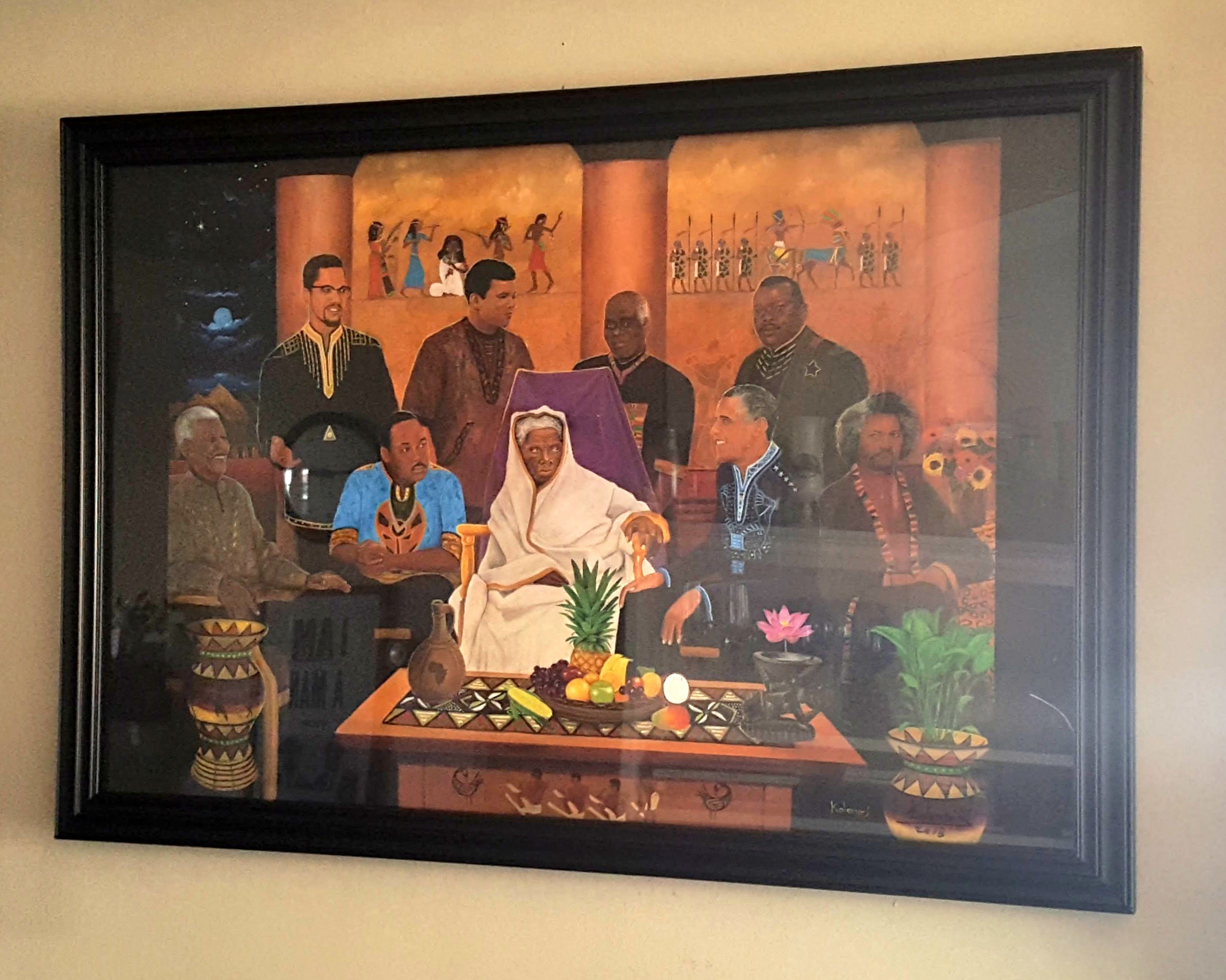
It is a remarkable piece. It has an African-American theme and Kolongi calls it, “Summoned by the Ancestors.” However, regardless of your ethnicity if you too appreciate art, history or culture I would encourage you to add this to your collection.
It depicts President Barack Obama during a meeting. He was summoned by the ancestors to discuss issues of importance to the African American community and the best path forward for our people. The ancestors that summoned him were Marcus Garvey, Harriet Tubman, Malcolm X, Frederick Douglass, Martin Luther King Jr, Dr. John Henrik Clarke, Nelson Mandela and Muhammad Ali.
I asked Kolongi what was his inspiration for creating this masterpiece? He indicated, “I always look for things which are unique and because so many people appreciated Obama and what he represented I wanted to create a piece featuring him while calling on the ancestors for guidance.”
I was happy to hear the large supply of prints Kolongi made sold out within hours and I am glad we had sense to scrape up enough money to grab it and have it framed.
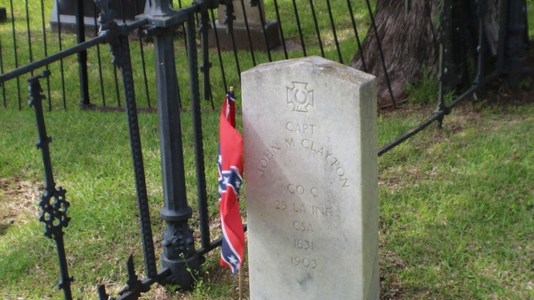
[Natchez, MS] We recently completed a trek which took us to the south, specifically Natchez, MS. My father is buried in the National Cemetery which is reserved for those eligible from their military service. Down the road is the Natchez City Cemetery, which I also visited as relatives are there as well.
If you have never been to the “south” or unfamiliar with the history, customs or the culture you may come across……. you might have the reaction as my wife Judith in seeing gravesites highlighted with confederate battle flags.
The flags were a sense of pride for those supporting the confederacy. There are many today, from all over the world who still proudly display support and recognize it as part of their “tradition.” Whatever the explanation, I respect their choice to be honored by that symbol. Although, I would encourage those who in 2018 claim the flag as some type of honor (unless, they are burying someone from that era) to immediately enroll in my american history class!!!!
It boils down to education or knowledge
The confederate battle flag was created to provide a distinct difference. In its day it was known as the “Stainless Banner.” The confederacy was created as opposition to those in the united states who wanted to abolish slavery, among other things. The result was the Civil War. The confederacy was basically identified as states in the southern region (i.e., Virginia, North Carolina, South Carolina, Tennessee, Georgia, Mississippi, etc.).
I have friends or know of folk who even today, have adopted the confederate flag. Their explanation is it has been a “family custom” or “tradition” and such, embrace it with pride. While some would go ballistic or be willing to disown them, I respect their opinions. Instead of vilifying them or excoriating them from planet earth I view it as an opportunity to educate and have dialogue, as long as there is genuine communication.
What you don’t know, you don’t know!!!!
While the flag is embraced by some, and perhaps by more than you might imagine……many do so because they simply conflate reality or historical facts.
Treason & Fear
The fact the confederacy wanted to have their own flag to identify allegiance is understood. Fortunately, the Civil War ended and the desire of the confederacy to have their own government was squashed by their defeat. Interestingly, some still fight the tenets of the civil war as if it never ended.
trea·son
ˈtrēzən/
noun
the crime of betraying one’s country, especially by attempting to kill the sovereign or overthrow the government.
So, from most historical accounts the actions of the confederacy were treasonous as their primary attack was to overthrow the current government.
As the Civil War ended, the dynamic of racial equality resulted in violence which still exist in some pockets of our country. Those in opposition of equality, particularly terrorist groups such as the Klu Klux Klan adopted the confederate battle flag. That is why even today, many who see the confederate battle flag being used, especially if they are African-American or non-white are reminded of the terror and oppression meted out by those who embrace the flag.
I recall during the Trayvon Martin murder and was completing some research in Sanford, we came across several confederate battle flags flying from homes. Remarkably, these were noticed in the same tract as the police department! We simply concluded that for many they embrace the flag and don’t associate the negative reaction, or don’t care from those who are not like them.
The confederate battle flag is a part of history. It may be easy to dismiss or prevent honest dialogue, even with those you may consider as friends? I understand the sense of pride of those who used it during the participation as part of the confederacy. However, for those who continue to embrace it, perhaps that represents the great opportunity for some basic conversation, education and reality.
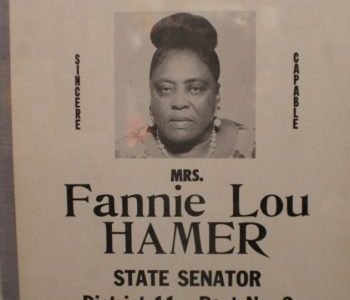
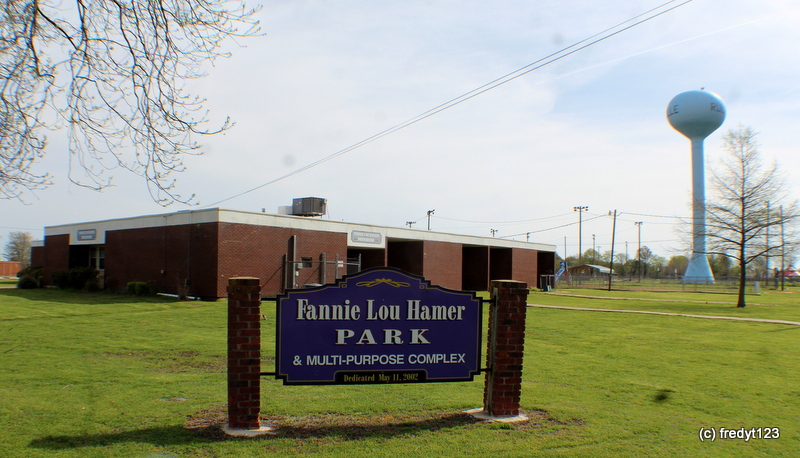
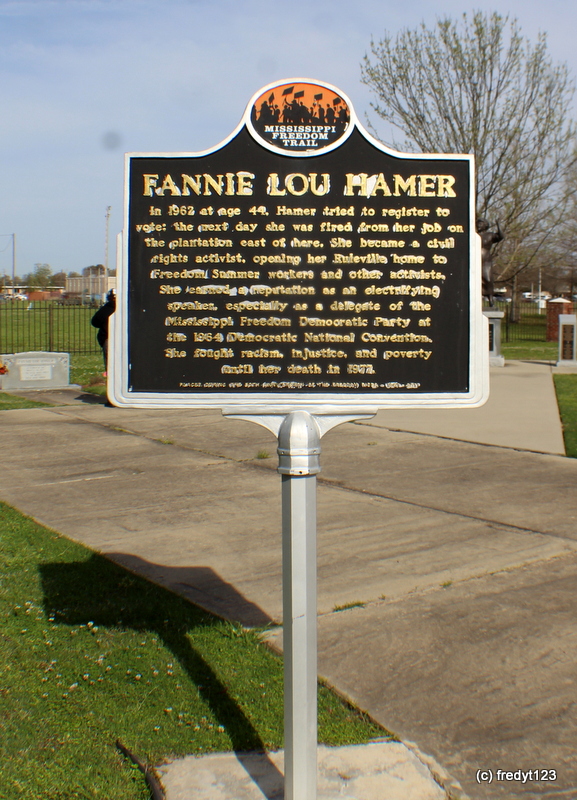
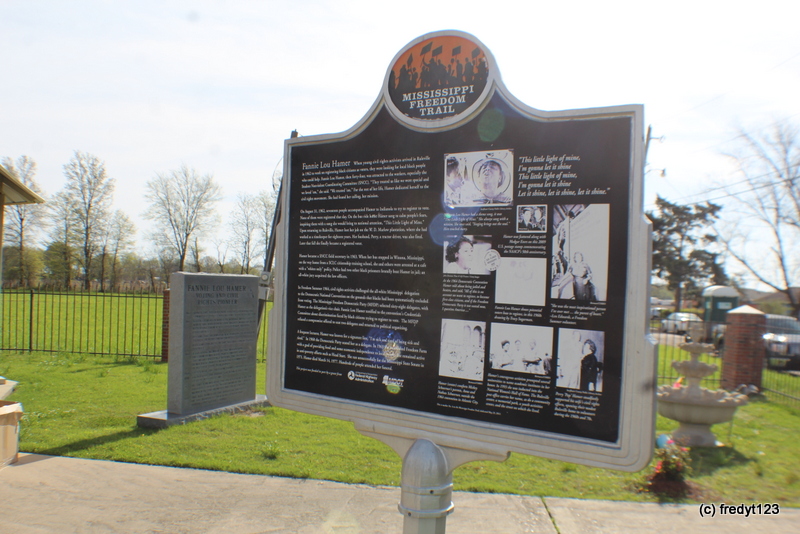
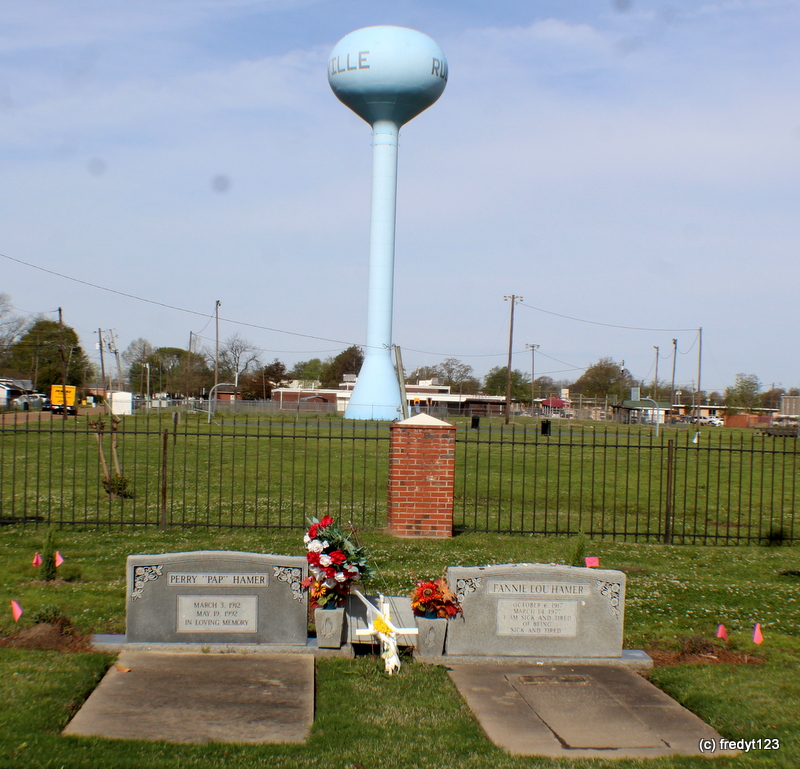
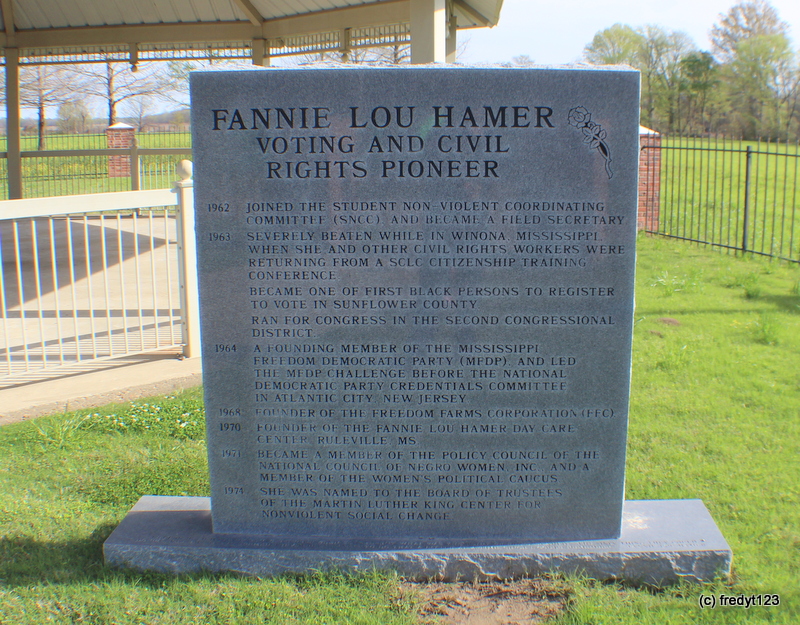
Ruleville is in the “Delta” and is about 2 hours southeast of Memphis and about 2 miles northwest of Jackson. Fannie Lou’s story is remarkable and we were blessed to finally be able to visit the site and pay our respect.
On the way from Memphis, surprisingly you will pass Parchman prison which is where Fannie Lou wound up simply for attempting to register folk to vote!!!! It was also the temporary home for many other civil right heroes, especially Freedom Riders who too took great risk of their lives in the fight of equality.
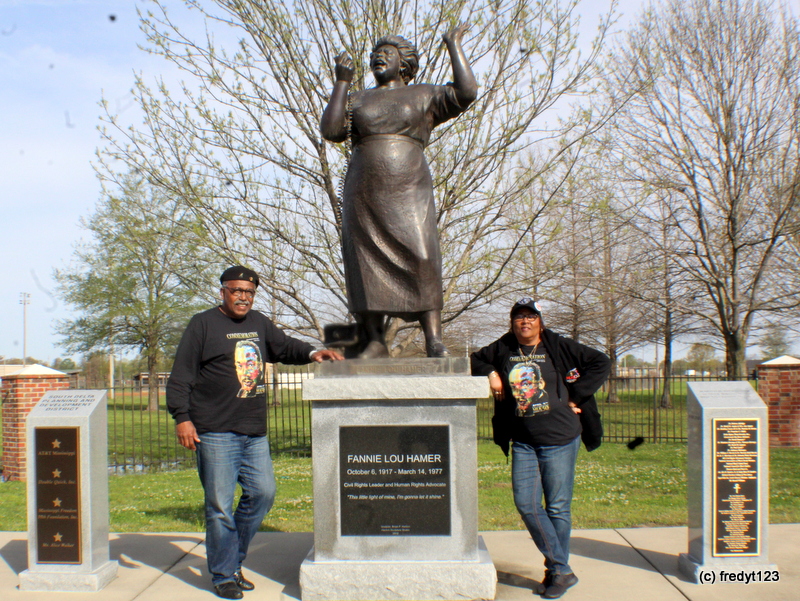
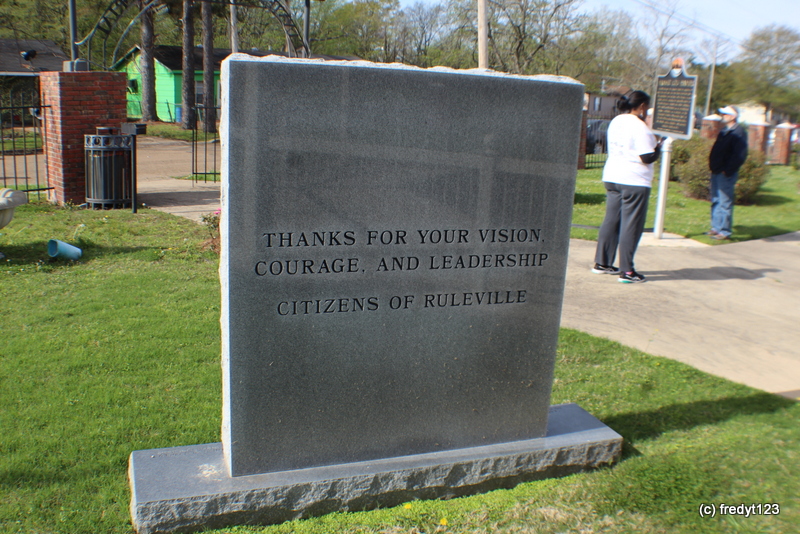
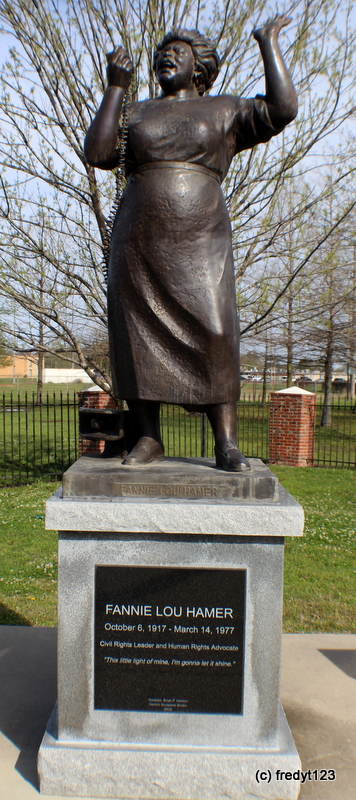
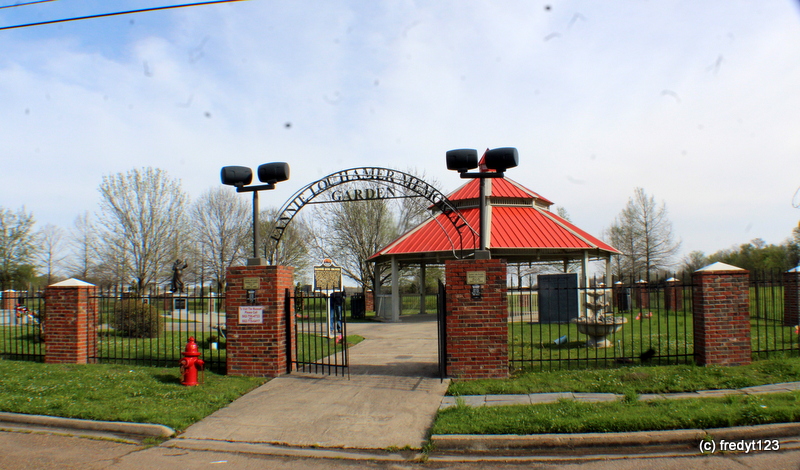
The Fannie Lou Hamer Park is part of the Fannie Lou Complex. In addition the museum (currently being updated), next door is the memorial gardenJudith and I take time for a quick pose at the great Fannie Lou Hamer statue
If you want to learn more about Mrs. Fannie Lou Hamer please see this clip from the iconic “Eyes on the Prize” as it chronicles the Mississippi movement as well as her role, including the sacrifices she had to endure.
[Memphis, TN] For a good many of you the question is moot because you were not born! But there are a good many like me who were around that first Thursday of April 1968.
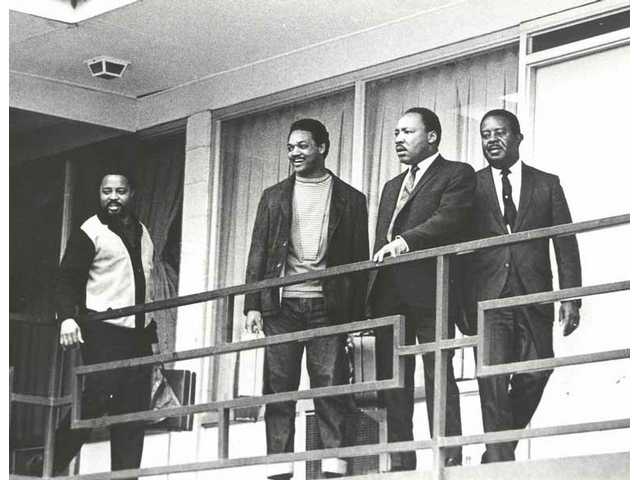
Dr. King and entourage getting ready to go to the Kyles for dinner. Dr. King had ordered Rev. Jackson to go and put a tie on. His famous quote was, “Dr. King the only thing you need for dinner is a good appetite!!!”
My memory is foggy but being a student of history, particularly the Civil Rights movement one thing I do remember is it is one of those days where you try and remember what you were doing or where you were at.
Pomona
I was a student at Ganesha High School in Pomona, CA. More than likely it was a basic day and the week was rolling by. At 6:01 pm (CST) a bullet tore threw Dr. King’s lower jaw and neck. While many have accepted the notion James Earl Ray was the lone assassin, I defer to the King family, Judge Joe Brown and others who accept the fact the bullet that fell Dr. King was not fired by Ray………but that’s another post for another time.
Being a motely student-athlete, in Pomona 6:01pm, translates into 4:01pm so more than likely I was at baseball practice. I can’t patch much more because there was not 24/7 cable news and if I recall the news at the “major” channels (2,4,7, etc.) was a whopping thirty minutes! Most of the news was communicated by CBS’s perennial anchor, Walter Cronkite. You can even do a search and see the iconic clip of him informing the nation.
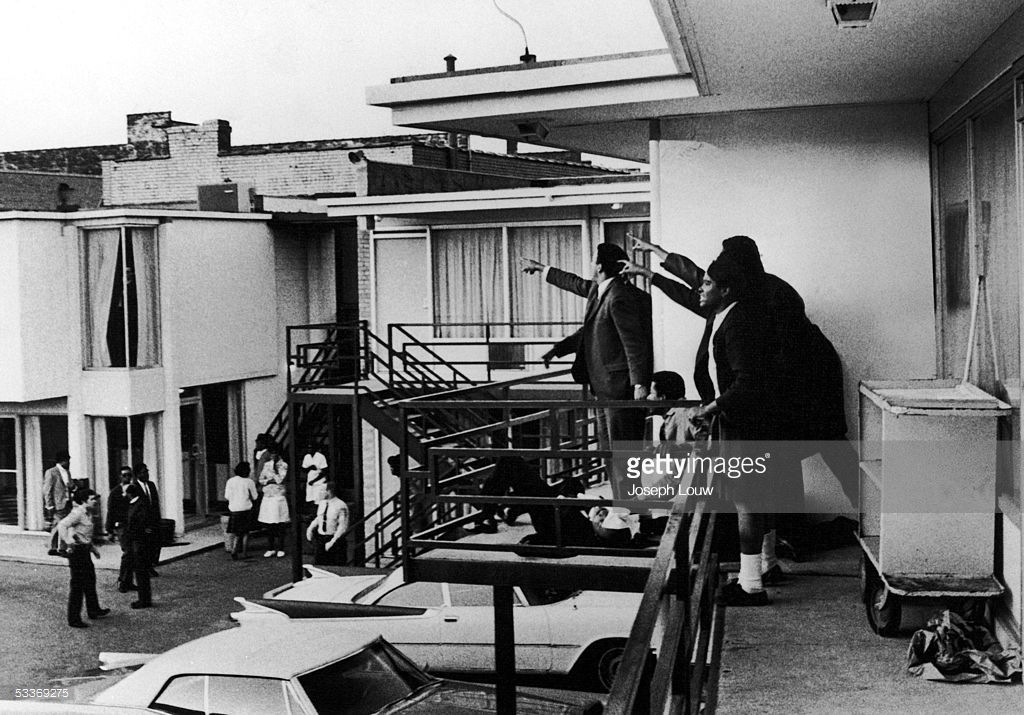
6:01pm folk came running to the spot were Dr. King lay
After practice, I don’t remember if I went to work or went straight home? My mother was a “news junkie” so more than likely the reality of Dr. King’s death was the focus of discussion later that evening.
What about you? Do, you remember anything from the news that rocked the nation at 6:01 pm, Thursday evening, April 4, 1968
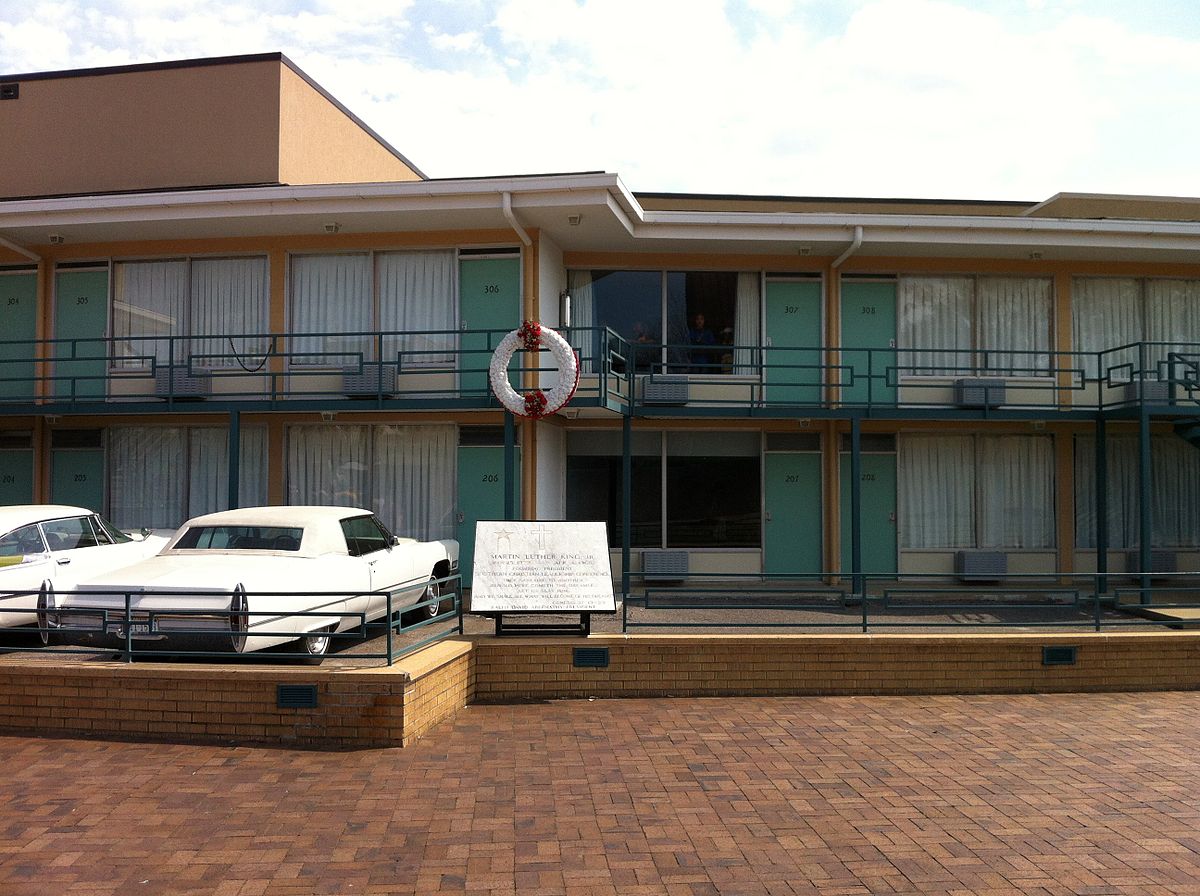
Dr. King’s room 306 is memorialized at the Lorraine Motel, which is now part of the National Civil Rights Museum
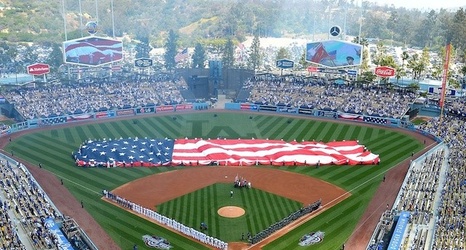
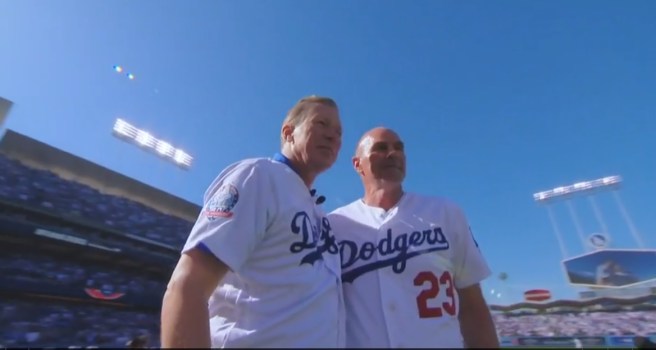
[Chavez Ravine, Los Angeles] Opening day is always a special event in major league baseball. At Dodger stadium or “the ravine” it takes on significance due to the team and their tie to the city. The fact the Dodgers would be hosting their arch-rival Giants was enough for most fans. But the treat about opening day is you never know what presentations the host team will unveil.
George Lopez and Samuel Jackson stole the show
Kirk Gibson’s monumental home run in 1988 has its place high atop baseball lore as an unforgettable event. Comedian George Lopez and Actor Samuel Jackson are unabashedly die-hard Dodger fans. They recreated the special time in history when Gibson was blessed by the baseball gods. The seven minute clip was quite a production and done so to introduce Gibson as he threw out the ceremonial first pitch. The production was amazing!!
As for the game, Dodgers ace and one known as the “best pitcher on the planet,” Clayton Kershaw got snakebit as his two-strike slider to the Giants pesky Joe Panik slipped inside the right field foul pole for a home run, as well as the only run as the Giants handed the Dodgers an opening day loss. One game down, one hundred and sixty-one to go.
7 MINUTE HISTORIC CLIP, courtesy of Los Angeles Dodgers
This past weekend thousands of souls participated in the annual Selma Bridge Crossing May Jubilee. The event commemorates the historic “Bloody-Sunday” event which occured March 7, 1965. Sadly when you reflect on what made the event historic you are reminded it was legal segregation maintained in many states across the United States and their refusal to allow African-American (Negroes) to register to vote. So for those who even today in 2018 sit while dismissing the notion that voting is irrelevant or doesn’t mean anything, I would implore them to study some history and understand why many in power used the law to stop folk from executing their constitutional right.
MLK’s 50th Commemoration
People from around the globe are making plans to journey to Memphis, TN to pay their respect and participate in the 50th Anniversary Commemoration of the assassination of Rev, Dr. Martin Luther King, Jr. Many events are planned and some are taking place as your read this. A special tribute will take place on April 4, 2018.
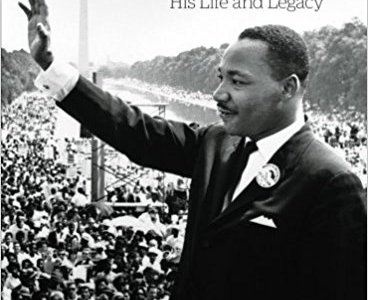
Time Magazine has released their book, “50 Years Later – Martin Luther King, Jr. – His Life and Legacy.” I received my copy today and the ninety-six page book will be a good addition to your library. It is filled with many photos and short essays which provide a perspective of Dr. King’s journey and sets the tone of the historic event.
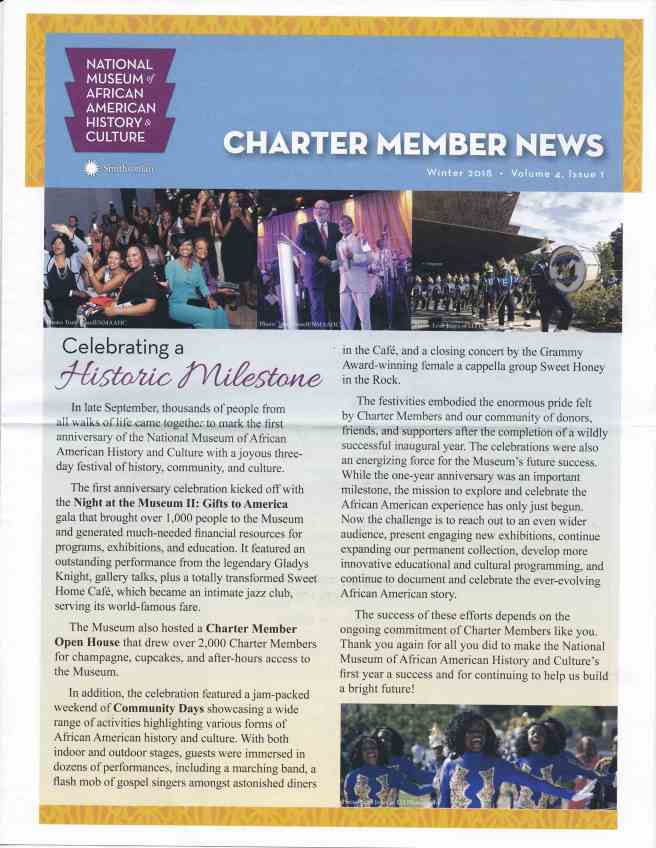
[Washington, DC] The Smithsonian National Museum of African-American History and Culture continues to be one of top visited sites in the District of Columbia. Some of you are charter members or other designations and received your recently published newsletter (Vol 4, Issue 1). For those of you who didn’t receive it we have made it available via .pdf format. The issue takes a look back from the historic opening until current.












 Thomas Reports