[Baldwin Hills, CA] Celebrating its twenty-sixth year as one of the prominent platforms for independent film producers to showcase their work, the Pan African Film Festival commonly known as PAFF kicks off tonight.
Those who are regulars to PAFF already know about it’s magic. Unfortunately, some are culturally conditioned and marginalize the event as just a “black event” or worse, “south of the 10 freeway.” In reality, PAFF proudly boast an event featuring films and arts and crafts from the diaspora (African-Americans as well as those with African ancestry who are all over the world). Organizers go to great lengths to make sure the venue and activities are enjoyable so that all who attend feel comfortable and safe while appreciating the cultural content that is provided.
“Love Jacked” opens the festival with the red carpet starting at 5:30pm and screening at 7:00pm. The twelve-day festival will feature approximately 175 screenings, arts and crafts, seminars and many activities for all ages. The venue will once again be at the Baldwin-Hills Crenshaw mall, which includes the Rave Theater.
“Babu” takes time to pose with Judith & Fred Thomas
PAFF was the brainchild of Ayuko Babu and through the years his commitment to keep the festival in the Baldwin Hills community has paid off. Artist come from various countries and cities within the United States to take part of the festival. Also, there is great support from the community as most screenings get sold out or near capacity.
“We started with just a concept and over the years many venues to the north and west of Baldwin Hills have pleaded for us to move, but this is our treasure and for those who really like what we have to offer they are more than welcome to make the trek and discover what most of us already know. ” Babu
For more information on screening times please check HERE
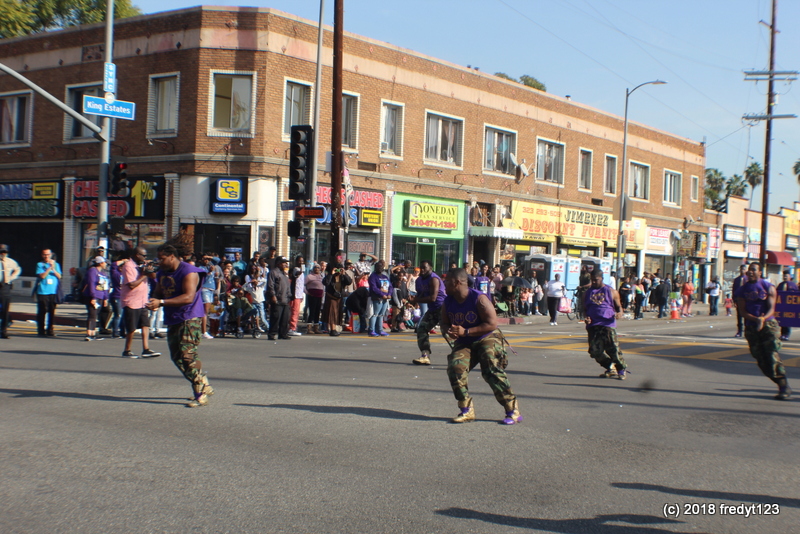
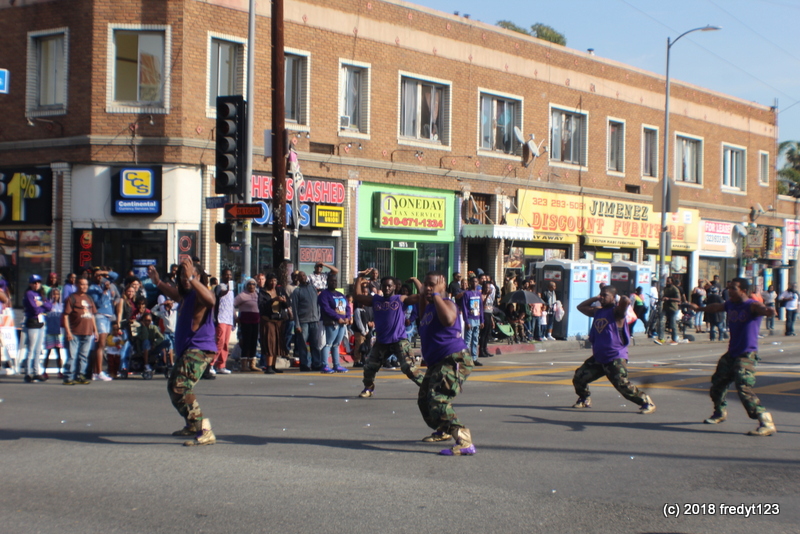
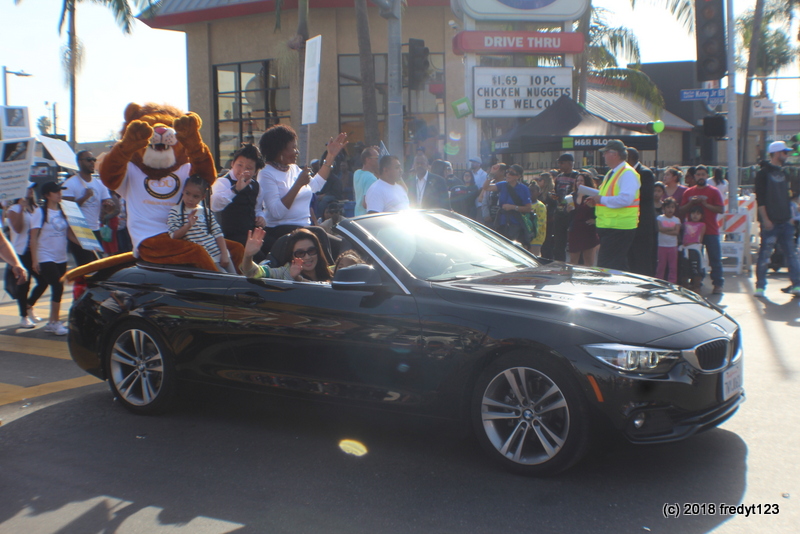
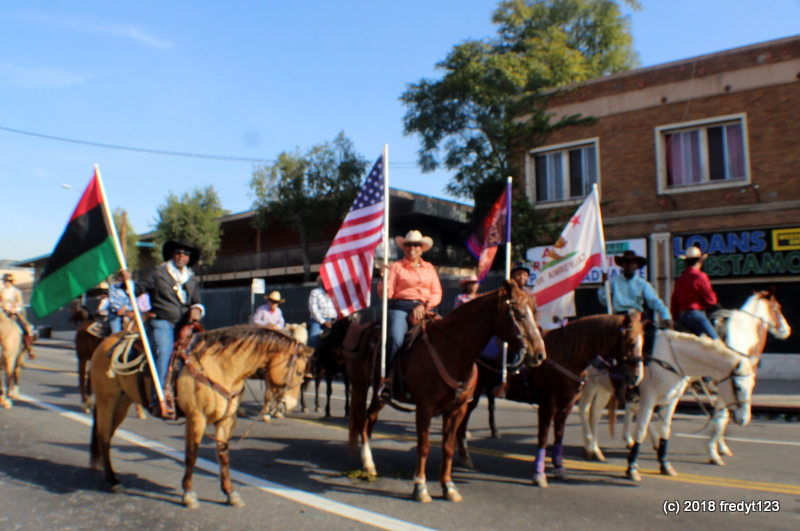
[Los Angeles, CA] Known as a great city in a huge desert people can count on Los Angeles to offer dry weather. Such was the case as the nation commemorated Rev., Dr Martin Luther King, Jr.’s birthday on Monday, January 15th.
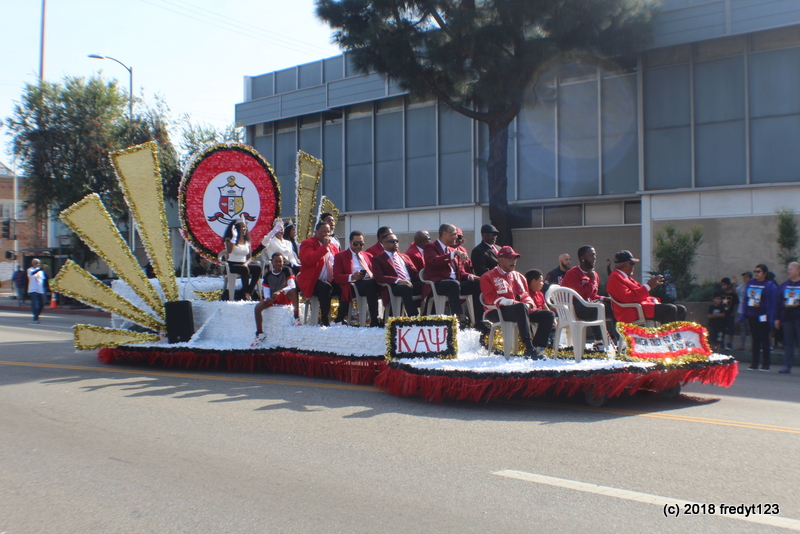
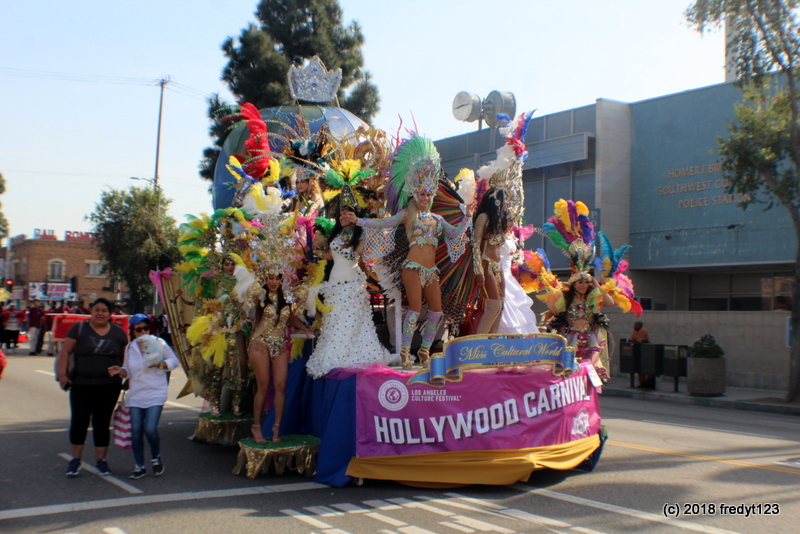
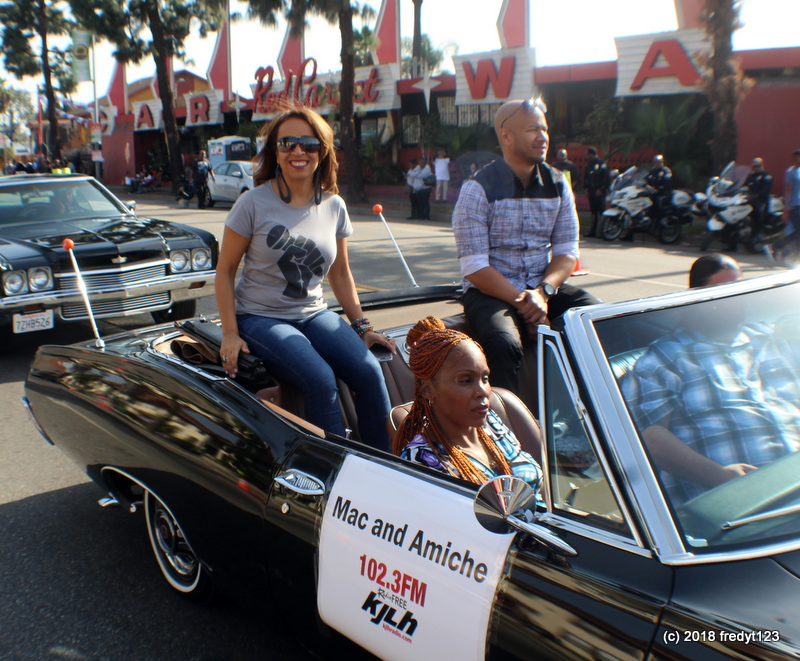
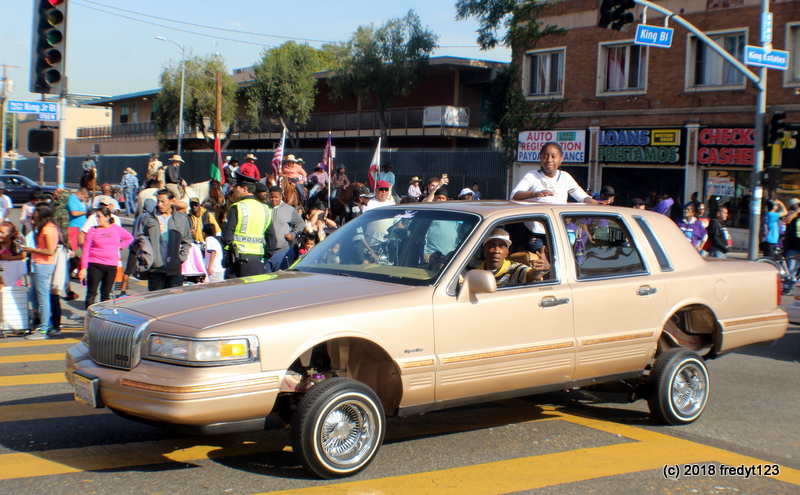
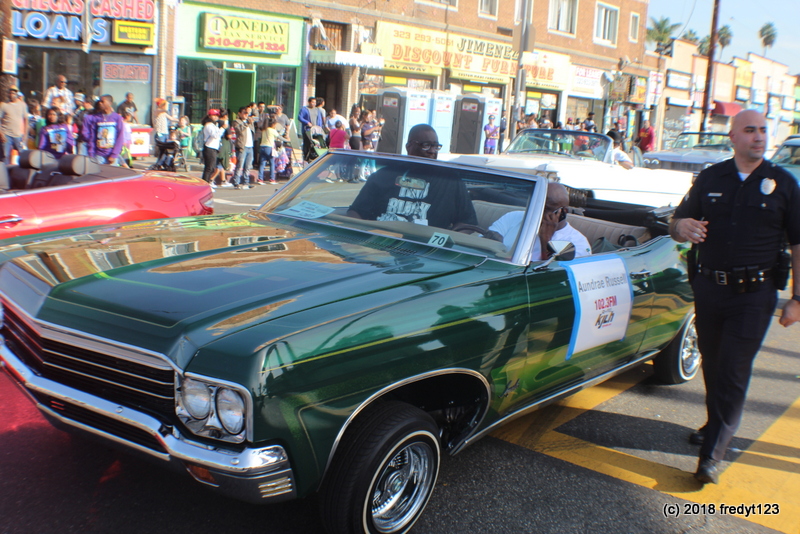
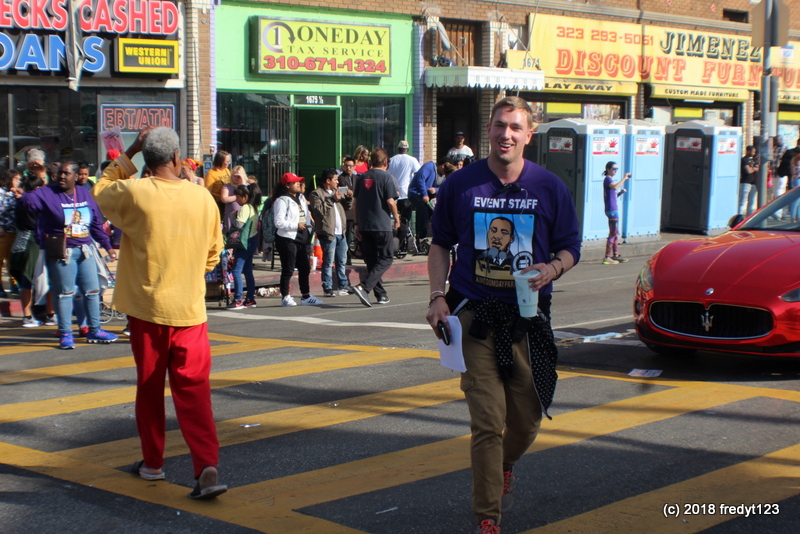
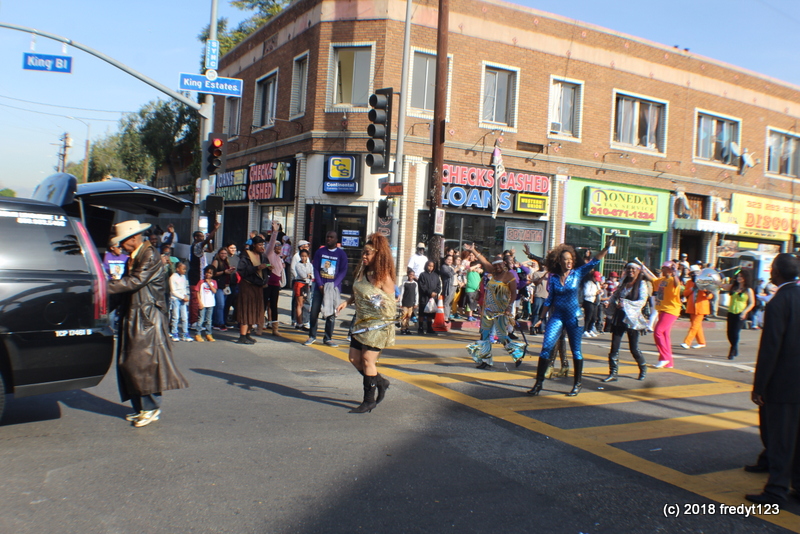
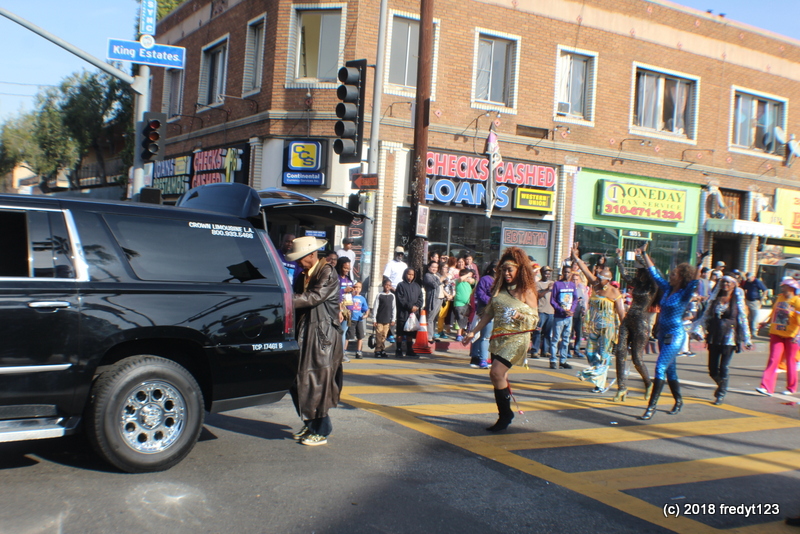
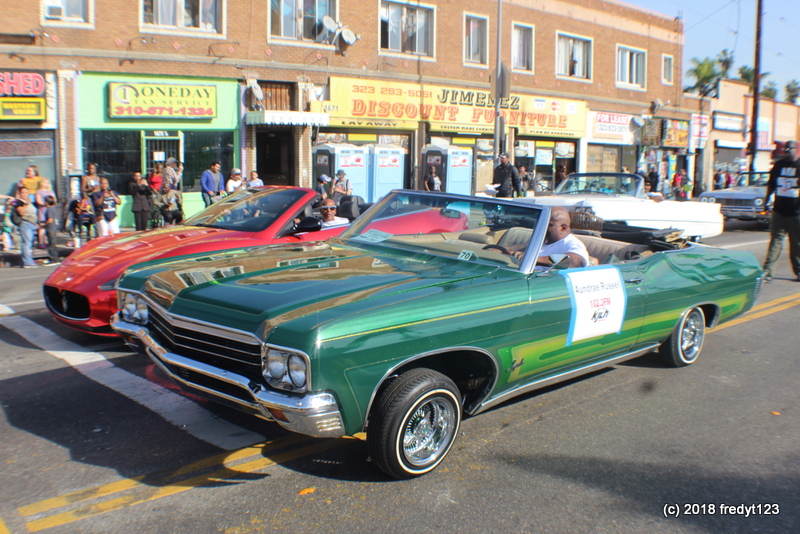
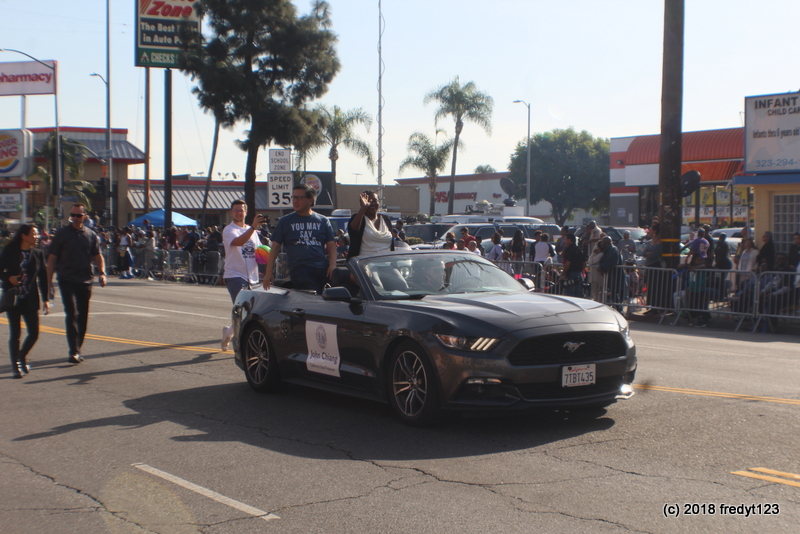
Organizers of the Kingdom Day Parade delivered another great event which was well received by the community. In addition to the hundreds of thousands who lined MLK boulevard to see the event live, over 3 million watched on local channel 7 affiliate, KABC-TV.
In just a few days the nation will be honoring the birthday of Rev., Dr. Martin Luther King, Jr. On Monday, January 15th in what would have been the 89th birthday of Dr. King, Los Angeles will once again be a leading city as it showcases its 33rd Kingdom Parade. Actually, starting in 1981 in San Diego, the parade was morphed into the Kingdom Day Parade in 1985. In addition to the hundreds of thousands who will be lining MLK Blvd., nearly 3 million are expected to watch the parade as KABC-TV will once again broadcast the parade live starting at 11:00am.
2018 is a special year when Dr. King’s name is mentioned, as it marks the 50th commemoration of his assassination and many are planning to be in Memphis on April 4th to pay their respect.
(c) fredyt123 photo – all rights reserved
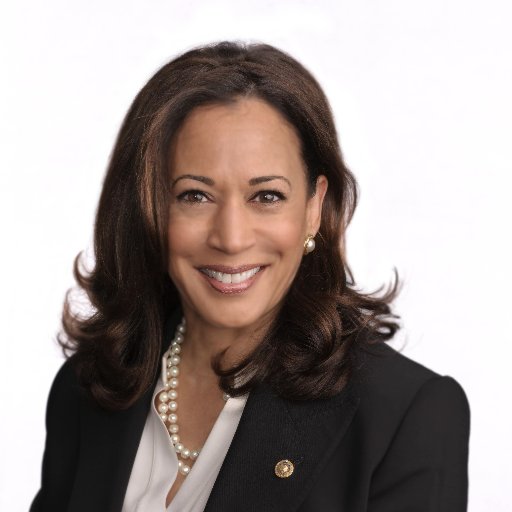
To recognize the significance of the Kingdom Day Parade, Senator Kamala Harris will be the Grand Marshall. Her selection has been met with enthusiasm as many view her as a dynamic politic figure worthy of honoring Dr. King.
United States Senator Kamala Harris – 2018 Kingdom Day Parade Grand Marshall
Some who were in attendance at the 2011 Correspondent’s Ball have suggested it was that event which convinced Donald Trump revenge was the only remedy to the humiliation Present Obama dumped on him. On that chilly night in April Obama’s team of writers had him buzzing better than the late Richard Pryor or even the late Redd Foxx as he had the entire room in laughter while chastising Trump over his ill-advised birther crusade.
As Trump was forced to sit in his chair all the while seething, you could see his mind was plotting the next move. During the 2016 presidential campaign he swore to his supporters that if elected he would take on an aggressive strategy of attempting to rescind any order approved by Barack Obama. Interestingly, even as his supporters wildly cheered his proclamations, they were not aware or didn’t pay attention that some of those orders actually benefitted them!
Nevertheless, Trump was determined and hell-bent on getting even. Fast forward to the holiday season of 2017 and we see first hand how Trump is obsessed with getting even with Obama, as he can’t find enough orders to rescind while suggesting they ALL were terrible.
The latest charade is the Net Neutrality issue. It doesn’t matter that in 2015 the Federal Communications Committee approved a guideline committing to equal access to the internet. With a majority in hand the Committee led by Ajit Pai felt obliged to help Trump in his quest to remove yet another Obama order. In the guise of increasing competition or the notion that any regulation is bad for consumers, on Thursday, December 14th the Committee voted along party lines to remove net neutrality guidelines.
The beneficiaries are the large communications companies such as A.T.& T, Verizon, Sprint and others known as internet service providers (ISP’s). The result of the vote means they now can manipulate internet speed which will affect traffic and in many cases, send a signal to consumers to be prepared for a price hike.
As simple as Net Neutrality is, it just sounds complicated. No doubt there is always room for improvement and yes, those consumers who use more than others should be expected to pay more. Surely, you can’t blame the ISP’s for having the desire to charge you for services which you use. The rub is consumers already have the option of improving internet speed by the tiered pricing structures ISP’s have.
At the same time the entire focus of net neutrality was to make the internet accessible for all, not to use it as a commodity to penalize those who simply lack the resources to obtain. Internet pricing has moved just like cable television. What seemed like a bargain at $29 per month has morphed to over $100, $200 and more. Companies offer a variety of rebuttals to justify the price increases, so as long as your budget allows you to pay, you simply keep moving. The ire for those protesting the commission’s vote is the core question; what happens to those who are priced out?
While the commission did indeed vote to rescind Obama’s 2015 guideline, it appears the last word on this issue has not been spoken. Just after the vote, public outcry reached a fever pitch as people from across the nation, even those who claim support for Trump have started their plea for Congress to overturn the commission’s ruling.
Protestors claim the fight has just begun
For those such as Trump, the issue does not appear to be what is in the best interest of the public as evidenced by public opinion. The issue for them is to use elements of our government as tools for revenge.
Roman J. Israel, Esq. is a dramatic thriller set in the underbelly of the overburdened Los Angeles criminal court system. Denzel Washington stars as a driven, idealistic defense attorney whose life is upended when a turbulent series of events challenge the activism that has defined his career. Colin Farrell costars as the ambitious, monied lawyer who recruits Roman to his firm.
[Leimert Park, CA] Known as the cultural heartbeat of the African-American community Leimert Park was full of energy as SONY Pictures, the African-American Film Critics Association and the Urban Issues Forum hosted a symposium and discussion on the upcoming movie Roman J. Israel, esg. Last night a standing room only crowd squeezed in the iconic Regency West supper club to hear first hand why this movie is a must-see.
“You have lots of great civil rights attorney’s but they are not the same as civil rights activist.” Jasmyne Cannick.
Led by AAFCA president Gil Robertson the panel was allowed to stretch out and gave great examples of current day activism in Los Angeles. The panelists were social critic and political commentator Jasmyne Cannick; the film’s director and producer Dan Gilroy; Professor of African-American studies and noted historian of activism in Los Angeles, Dr. Anthony Samad and noted community activist attorney Nana Gyamfi.
Asked about what motivated him to create the film, director Gilroy stated he is a “child of the 60’s” who grew up in a very liberal-minded family. He noted the impact of the civil rights movement and how he came to appreciate the activist attorney’s who worked during that period even up until now. “The issues never stop,” mentioned Gilroy. He spoke how the character portrayed in the movie had a unique personality and once he showed the screen play to lead actor Denzel Washington the rest is history. Washington played a critical role in developing the film and once the movie “Fences” was completed he gave his full energy in helping Gilroy bring the movie to the big screen. Screening is set with a special engagement on November 17th in Los Angeles and New York.
The film is set in Los Angeles during the ’70’s and is one you will enjoy. Coincidently, coming out of the civil rights movement many students moving on to college were motivated to study law. A good crop were led to become proficient as “people’s law” attorney’s with the aspiration to bring justice to all of those who were underserved or victims of the criminal justice system. Like the movie character Israel, they weren’t the most flashy in appearance but were extraordinary in understanding the law and how it could benefit the clients who sought them out. Israel’s character also reminds you of the work such as James Bell who has built a stellar legal career dealing with the injustices of youth.
Ta-Nehisi Coates “We Were Eight Years in Power – An American Tragedy” is a must read for those who desire to stay informed in our current environment.
CLICK PHOTO ABOVE TO VIEW ENTIRE VIDEO. (L-R), Ta-Nehisi Coates, author and national correspondent for The Atlantic, and moderator Michele Norris, freelance journalist and author, participate in The Smithsonian National Museum of African American History and Culture (NMAAHC) in Washington, DC hosted “A Conversation with Ta-Nehisi Coates: We Were Eight Years in Power”, on Tuesday, Oct. 10, 2017. (Photo by Cheriss May/NurPhoto)
“We Were Eight Years in Power” showcases Coates’ voice who is a Gen X’r but offers credible perspectives as seen through the African-American lens, or at least from those such as his. The book weaves eight essays and demonstrates a new thought of how our world is changing. The notion of Barack Obama running for president, let alone thinking he could get elected seemed like a lark, if not an impossible reality to so many. Yet, people like Coates and later generations such as millennial’s write with pride as Obama defied the odds to become President and successfully completed two terms. Starting as a Blogger, Coates joined the team at the Atlantic and in a short period has taken off.
The content of the book takes you on a journey of historic reality. Some may be troubled from how Coates portrays racism and how it has shaped our culture. He admits there has been progress but while so many dismiss the gains as we are “so better off,” his point is to remind you of the vestiges created from the notion of using race as a benchmark.
Regardless of whether you agree with some of Coates perspectives or not, the book is chalk-full of personal examples and other documented facts which allow you to better appreciate his writing style. He is unapologetic and reminds you how African-American’s have risen to tremendous levels of success, despite the barriers of how life is conducted in the United States.
Through his credibility as a journalist/writer he was given the opportunity to be in the company of Barack Obama. The first meeting morphed into a relationship where then president Obama invited him to the White House for more robust discussion centered around race and progress. Coates writes how much he treasured the invite and subsequent relationship.
The chapter “My President is Black” came from an essay which received international acclaim. Despite your feelings of Barack Obama, Coates allows you to better understand the rise and how he and first lady Michelle took the notion of being the first African-American president with pride and conducted themselves impeccably.
As this review is being written, Coates is concluding his book tour. Also, the recent elections of November 7, 2017 which brought a solid rebuke to Donald Trump, his politics and the rhetoric he spews is a point Coates makes, still in disbelief the voting public elected him as the 45th president is very interesting. The book references this point with a unique twist. Coates brings it home by helping the reader understand the dilemma and pressures Obama had to contend while, while Trump with just the reality of being a “white man” desiring to be president never had to deal with the continuousness. His primary issue was brought on by his own actions, not from systemic racism.
Coates admits not trying to be a “voice” for people or causes, but through his writing and how he has penned this book you quickly are thought to elevate him to a credible voice, which will be prominent for years to come.
The book which is a tad under 400 pages is a quick read. The good news is each chapter is its own separate essay and does a very good job of referencing how Coates saw things during the eight years of Barack Obama’s presidency. It is a worthy investment for your library, especially if part of your frequent communication is on politics and race, and you truly desire a different perspective.
[Los Angeles, CA] On September 13th KCET in partnership with The California Endowment hosted the premiere screening of CITY RISING. The theme of the documentary is gentrification. An overflow crowd of nearly 700 was on hand to see the “Director’s Cut” which was 90 minutes. Coincidently, on the same evening KCET showed the regular 60-minute screening on their channel.
If you’re black, get back!
If you’re brown, stick around!
If you’re white, it’s all right!
from an anonymous social scientist
Gentrification, a working understanding
Not every white person is rich and not every black person or those of color is poor! One legacy of the history of the United States is the construct of racism or using race as a controlling factor. On basic quality of life issues; from economic or the ability to earn money, to health, to housing and other areas whites were granted privilege over other groups. Even today many attempt to dismiss this very basic fact of not understanding or accepting the issue in a historical context.
“He who gets behind in a race must forever stay behind or run faster than the man ahead of him, that is our dilemma” – Dr. Martin Luther King, Jr. January 1961
That privilege buffered by legal discrimination, including specific land covenants of who could buy land or live in certain communities which set in motion the premise of defining the American Dream as being able to afford a home. Unfortunately, the dream dismissed the reality of certain groups being blocked based on race.
In addition to basic shelter, the more important benefit of home ownership is wealth accumulation or a legitimate asset which has generational benefits. The lack of it, is one reason for the marginalization.
Inner cities, the target of gentrification
Following the great depression and leading up to the industrial revolution, cities throughout the U.S. witnessed an economic boon. Labor was the fuel that fed the boon and many ethnic groups relocated and the result was financial uplift. As the majority group or whites were enjoying the lions-share of the boon, they created the strategy in developing suburbs which allowed them to flee the urban core. They were able to transfer their properties (through sale or renting) to the minority groups who remained. Thus, the term “white flight” was coined. More important and critical to the gentrification discussion is the reality that as whites moved out of the urban core, critical resources were stripped and went with them. Employment stability left. Stores left. Services left. Resources which are necessary for a community to thrive slowly disappeared. The result was communities were disseminated and succumbed to blight and other negative forces. As bad as that may appear the groups who remained didn’t die off. Instead they created their own identity based on their culture to create a vibrancy which allowed them to thrive and redefine the space they occupied.
Reclamation
City Rising focuses on several communities in California. They are Santa Ana, Long Beach, Sacramento, Oakland, Boyle Heights and South-Central Los Angeles.
One poignant part of the documentary is discussing the issue of racial covenants which made it illegal to sell property to certain groups. Many people are ignorant to this reality and dismiss it as being made up or something which happened lifetimes ago. The sad reality; it is current history regarding real estate ownership. Assemblyman Hector De La Torre lives in South Gate, CA. The discussion centered around him showing the covenant as part of the land title documentation which years earlier would have prevented him from purchasing the very home where he was being interviewed. Even though the practice was outlawed through fair housing legislation, it remained as permanent language within the documentation. Using his activism as a political leader he created a law which would have required title companies to remove the language from the report. Unfortunately, even though the law passed, then Governor Arnold Schwarzenegger vetoed it and the language remained as a reminder of the discrimination meted out against certain groups.
The documentary does a good job in highlighting the effects of gentrification. Even though race plays a huge role in its impact, the subtle reality is the class divide or the “haves versus the have nots.”
Cities that were once thought of as “dead” have sprung to life through various forms of reinvestment. Interestingly many of the families who fled the urban core, see their offspring take on a renewed pioneering spirit to reclaim areas. With their economic status, they are able to pick up properties, many on the cheap and with modest investment, transform what was unthinkable into havens of a new lifestyle. Through this process and focus on redevelopment they are able to attract stores and services which provide a great opportunity, assuming one has the money to operate.
People can only buy your property if you agree to sell
Who doesn’t want to live in a “nice” neighborhood? The problem with gentrification and this is where CITY RISING shines is as new people reclaim or move back into neighborhoods, the issue is what happens to the current occupants? Do they just disappear? Do they escape in the middle of the night? For many it’s pure economic, especially the vast majority who are renters. Those who reclaim properties and invest in the restoration are not motivated by some benevolent gesture, but from an economic perspective so it boils down to return on investment. The result is the rise of home prices as well as the rise of rents. Many occupants simply become priced out and that is the ire of those who oppose gentrification. The community they thought they knew……no longer exist, so they must rebuild their lives or try to coexist with their “new neighbors.” Some do it very successfully, most don’t because they do not have the leverage of home ownership.
There is much more to this topic. The causes and effects are worthy of examination. This documentary does an excellent job in creating a foundation for you to move forward.
Congratulations to Mr. Roland Yorke, Consul General of Belize, staff and supporters, Office of Consulate General of Belize to California for the 36th Anniversary of Independence and the 219th Anniversary Battle of St. George’s Caye.
Los Angeles is home to more than 125,000 who hail from Central America’s smallest and only english speaking country; BELIZE. The event is a testament of their hard work to leverage the various community groups to help those in the motherland, whose population is estimated at 300,000.
A complete copy of the souvenir booklet can be found on the link below.
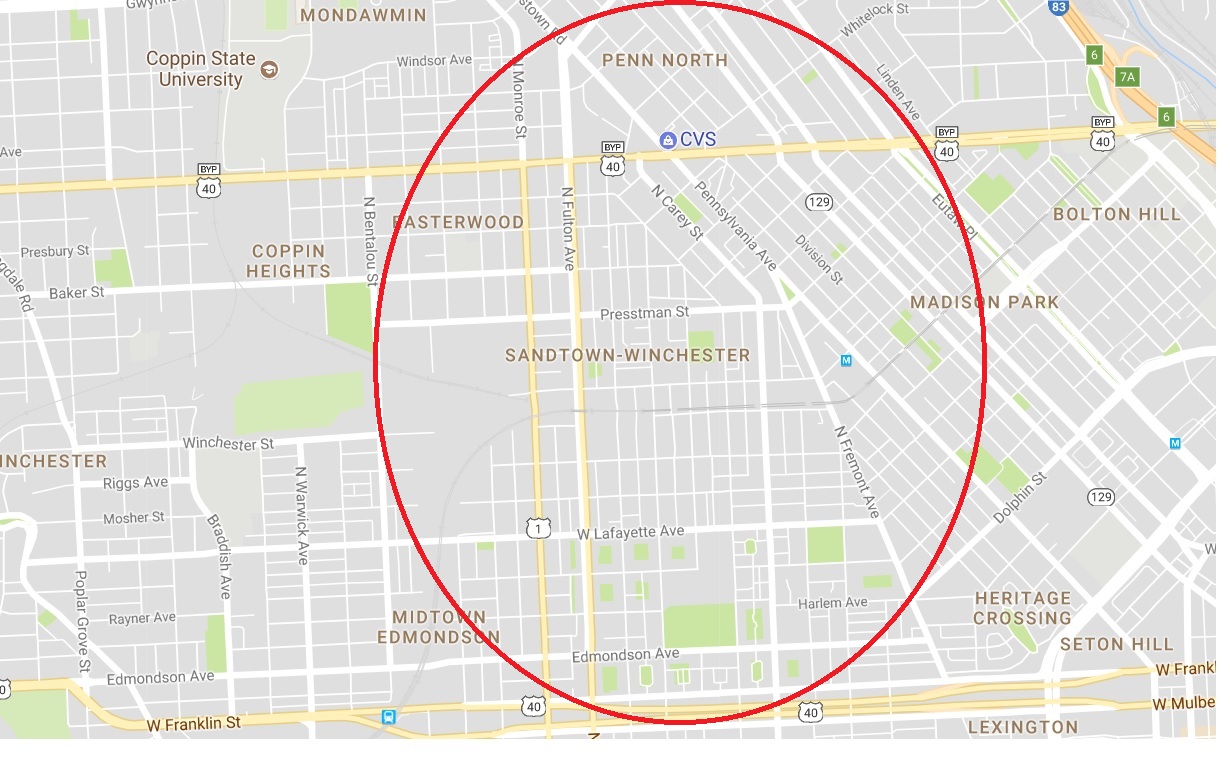
Like a “Raisin in the Sun” or a “Phoenix Rising from the ashes”, out of all the darkness in a place called Sandtown, there is light!! That light is in the form of residents and leaders from the greater West Baltimore community who are determined to demonstrate what engagement is all about.
new home development in Sandtown. photo (c) Fredyt123
This past week as part of my annual EastCoast trek, I needed to revisit the Fannie Lou Hamer community agriculture garden. Luckily several leaders were present and I was warmly greeted by Durreshahwar Smith who affectionately goes by “Durre.” I was at ground zero and witnessed first-hand how the group embraces basic self-awareness principles to reclaim a sacred portion of the Sandtown community.
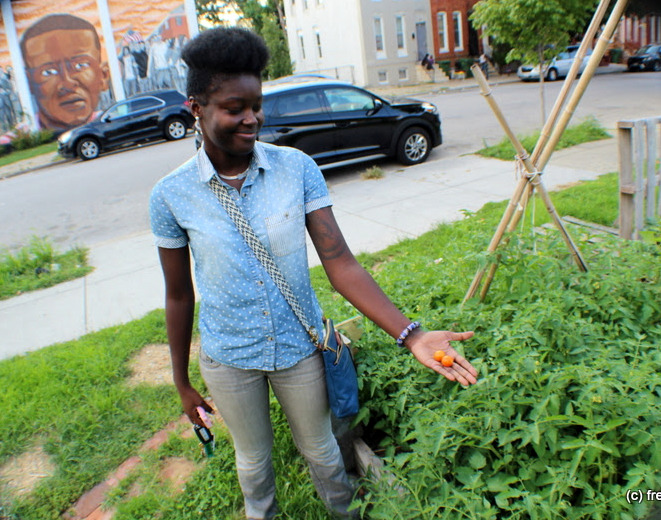
Durre, Vice President of The Tubman Organization showcasing cherry (small) tomatoes. photo (c) Fredyt123Durre, Vice President of The Tubman House, showcasing carrots ready for harvesting. photo (c) Fredyt123
Empowerment
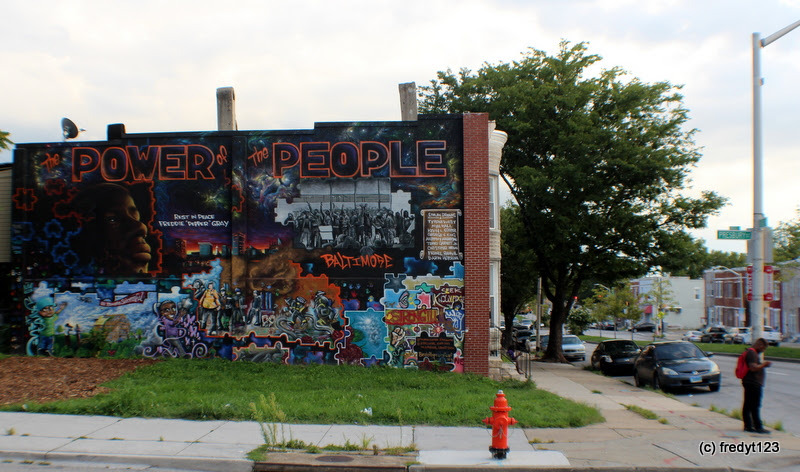
Durre is Vice President of The Tubman House organization also known as “1619”, a fledging group of community activist dedicated to cobbling together resources to benefit the residents. It is of consequence the group formed around the time of the Freddie Gray take down and one of their primary plots of land (the other is on Mount and North Calhoun Streets) is directly across the street on the corner of Presbury and North Mount streets. The mural provides a powerful image that is worthy of reflection.
“Our leadership understood the importance of building relationships with the residents. This was critically important for those who operate on the other side of the law. An agreement was reached where our projects were labeled as safe havens or areas where the youth would feel free of danger.” Durre
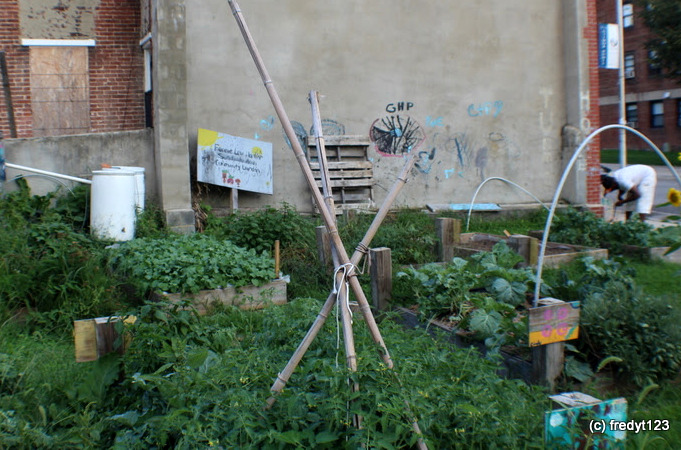
Fannie Lou Hamer garden across the street from the iconic Freddie Gray mural. photo (c) Fredyt123
A critical strategy of the organization is to leverage the expertise of adult leadership while focusing on creating opportunities for the youth of Sandtown to take a direct role to participate in a variety of projects.
photo (c) Fredyt123
Perspective
Sandtown is a community in West Baltimore that full of blight and neglect. It is not the type of place you venture into with naivety, gullibility or lacking common sense. In other words, it is not a place for those considered “weak or feeble.” Typical to many communities in what is known as urban or inner city, you see failed public policy, drug infestation, crime, high unemployment, apathy among residents, lack of personal accountability and other negative attributes all which lead to very deplorable conditions.
As bad as the conditions may be, it’s the type of environment where it is easy to offer assumptions or make stereotypical comments with very little basis of facts. As an example, when Donald Trump boasts about the “Inner City” with a very condescending and ignorant voice suggesting it is a place where ONLY blacks live, places like Sandtown come to mind. No doubt places like Sandtown have generational effects where segregation and the lack of positive public policy have helped to perpetuate a sense of despair. To the point, I have friends who are black who would be a nervous wreck or scared for their lives if they were forced to venture down the many streets in places like Sandtown. That is because so many have been conditioned to be fearful of those considered poor or “less-than” That is not to say because you are black you should have some type of immunity to poverty or crime as that is where people like Trump get it wrong, as blacks live in all types of environments and many of them enjoy thriving lifestyles. However, to deal or understand the urban core and feel comfortable in engaging the people you simply need inner courage and humanity so that you can deal with them at a basic level.
When asked a question to a Baltimore Policeman who knows Sandtown well as to why there appears so many young people just hanging out or otherwise appearing to be loitering his response was, “you gotta understand Baltimore is a city where after 15 years of age youth are allowed to emancipate or otherwise drop out of school. So those without options are easy prey to the streets.”
April 12, 2015
Civil unrest or riots is not a new phenomenon. Oftentimes you will be able to document conditions which have festered for years and like lighting a match, it takes only a flame to allow all that pent-up frustration felt by local residents to explode in the form of outrage. During that April day in 2015 many who unleashed their emotion against a system they deemed to marginalize or keep them mired in the negative position didn’t personally know Freddie Gray. What they did know is his death was the spark plug that ignited the riots. That is a fact for most uprisings. The person or focal point of the issue may have some controversy, right or wrong but like the Freddie Gray incident, it is a metaphor and justification of a reaction.
Power to the People. Photo (c) Fredyt123
You don’t want to go there!!
I first visited Sandtown in August 2015, just four months after the day of destiny on April 12,2015. I recall many insisting I should not go to Sandtown, let alone by myself!! As a matter of fact, I was in the Inner Harbor section of the city and needed to jump on the Marc subway so I could get to Sandtown. At the Shot Tower Marc station, I asked the transit worker, who happened to be an African-American female which stop I should exit to get to Sandtown? Her look was one of bewilderment, “oh! You really don’t want to go down there – it’s very dangerous.” All while shaking her head as to admonish me for asking what she felt was a question that could result in great peril for me. Being the hard-headed, if not determined person I claim to be I finally made it to the Penn North Station and once I came up to the street level, you could still smell the effects of the CVS store which was looted and destroyed during the riots.
I walked a good majority to Sandtown by foot, going street to street and it took most of the afternoon. The reason this was necessary was so I could get a feel of the community. I do not profess to be some bold, Shaft like character who is fearless but it’s a sense you develop. Either you are not afraid to venture into harsh urban areas or you are? I knew for me to be able to accurately offer a perspective of Sandtown, it was necessary to brave the elements and soak in as much information in the form of sounds, smells, or something as simple as hearing the chatter from people talking, etc.
“This work is not easy but it is something we felt needed to be done”. Durre
2016
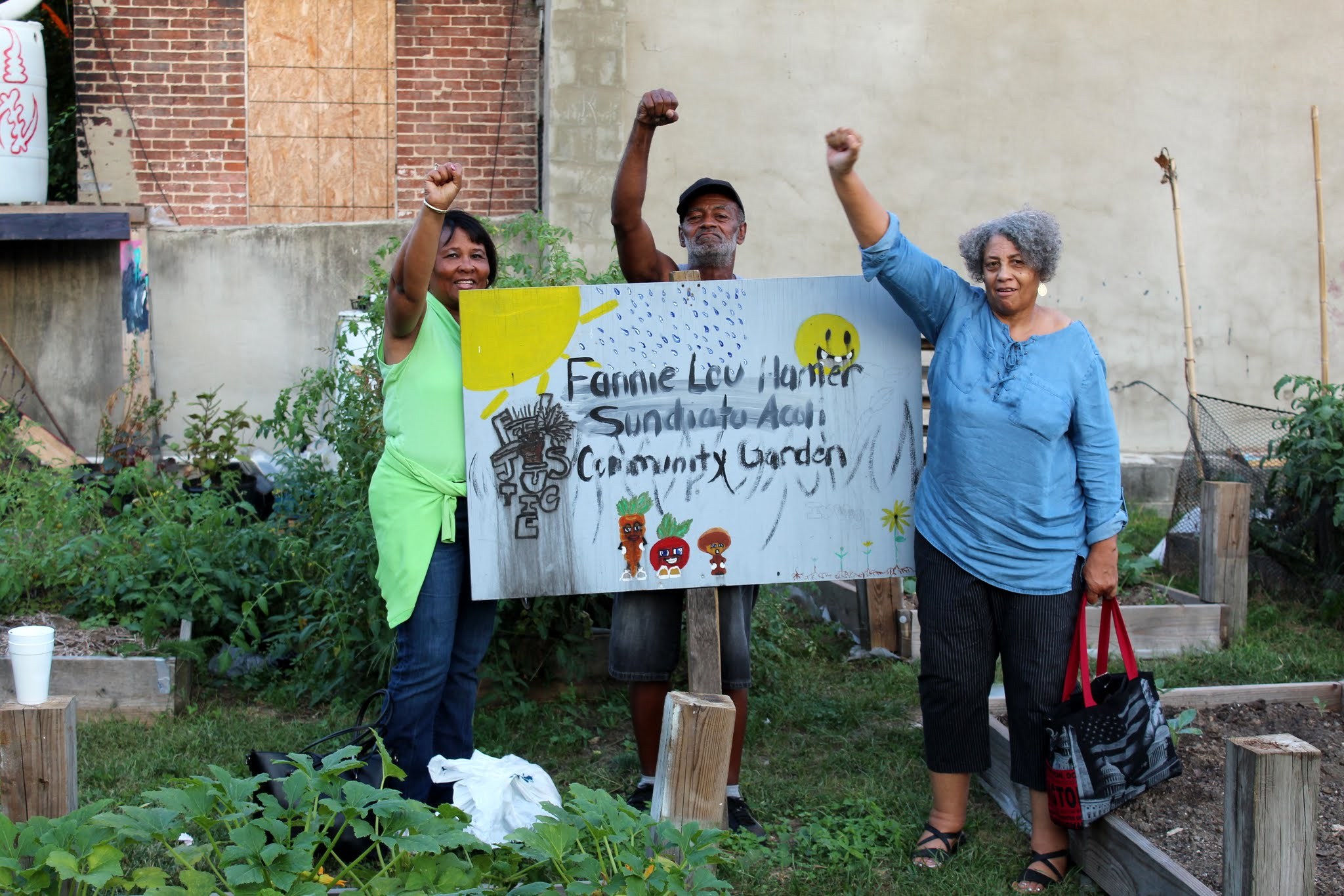
With a better idea of Sandtown I looked forward to visiting in 2016. Joining me was Judith and my aunt, Maryum. A figure across the street caught my eye. As dangerous as we were told venturing into Sandtown might be, I assured them everything would be alright. Again, Sandtown is the type of community where there are many people who congregate outside their homes or at various spots on the streets. Some, not knowing any better might define it as basic loitering. I approached the figure who caught my attention and he introduced himself as “Soldier.” He was tending the lot across the street from the Freddie Gray mural and proudly stated a group he was affiliated with was reclaiming parts of the community by starting basic farming projects on lots which were abandoned. Like the scene I witnessed during my first visit, adjacent the lot Soldier and I found ourselves were many row homes (typical housing stock in that region) which appeared to be in disrepair or ready for demolition. It was an incredible sight. Soldier confessed to me, but not apologetically that he had been incarcerated for a very long time and how he took pride in the agriculture project because it gave him a sense of purpose. I was impressed the group had the vision to name the plot of land after one of my heroines, Fannie Lou Hamer. Soldier agreed to pose for a picture with Judith and my aunt and proudly spoke about the determination the group had in being a positive force in what is good about Sandtown.
Soldier proudly proclaiming the determination and strength of the project. Photo (c) Fredyt123
He spoke to me about “The Tubman House” and gracefully invited me inside. Once inside he directed me to the spot where there was a remarkable mural which one of the members had painted. It was an outstanding sight and tribute to Harriet Tubman.
The famous mural of Harriet Tubman inside the Tubman House. Photo (c) Fredyt123
The Freddie Gray connection
Urban blight is not new. Sandown’s are scattered all across the United States. You don’t have to be a social-scientist or social worker to see how generational behavior crisscross with public policy, or the lack thereof which leads to a stark and dangerous environment. Better stated, some define it as “life in the hood!”
Last Friday we were fortunate to gain access to a Baltimore City policeman who happens to be African-American. His name will remain anonymous as his remarks were unfiltered. He was very quick to state Sandtown is a very dangerous place. “There are pockets in the city, particularly in Sandtown where they hate the police.” Part of that sentiment could be because they are viewed as a disruptive force to the elements which thrive in a criminal environment where selling drugs and other substances is a lifestyle.
He went on to state it was then Councilman Nick Mosby who responded to pleas from Sandtown residents to crack down on all the illegal activity which held them hostage to those who benefited from the condition. Thus, more law enforcement was put in place with the goal of weeding out the negative forces.
His contention is the public did not have all of the facts regarding Gray’s capture and subsequent death.
“Freddie Gray was one of those who was known as a petty drug seller. One of the drugs he sold was heroin.” The officer offered the viewpoint that as Freddie Gray was being chased down North Mount he swallowed the product in his possession, rather than being caught “red-handed.” He further mentioned the officer’s capture and subsequent removal of Gray was done in a routine process. Additionally, he mentioned Gray was recently involved in an auto accident and was recovering from his injuries. Therefore, he offered the opinion that it was swallowing the heroin combined with a flair up of his injuries which caused him to mysterious die, not the behavior of the officers who took him into custody.
Gray is gone. Sandtown still has a dangerous feel and in some parts, you are at ground zero but people are people. In any community, you have the good and the bad. Sandtown did not get into the condition it is in overnight. As mentioned, it is generational and indicative of crime and unemployment. At the same time, you see streets being reclaimed as the standard row houses are rehabilitated or rebuilt designed to give hope to the residents.
The same is true for what is going on at the Tubman House. To see the youth taking pride in the project is encouraging. To see the tangible result of their work in the agriculture garden is inspiring. The notion the food they grow is donated to the local residents is not viewed as a hand-out but more of a gesture to motivate the community to embrace the project. The sight of having passerby’s stop by to see what is going on and to see watermelons that came from the garden which could easily be sold for a handsome profit as some of the more trendier markets is incredible.
The youth grew them, now time to sell them! Fresh melons. Photo (c) Fredyt123Youth take a break to sample what they grew. Photos (c) Fredyt123
Sandtown needs a lot of work. The Tubman House is just one group staying in their lane to provide uplift. As big as the area is, I am sure there are more groups with the goal of empowerment but they are just basic workers who quietly go about their business of doing their part.
In meeting Soldier, Durre and other adult workers as well as the youth there is no doubt they embrace the philosophy of Harriet Tubman, Fannie Lou Hamer, Marcus Garvey and others to demonstrate to the community, bringing light out of the darkness starts with their passion, commitment, dedication and faith in each other.
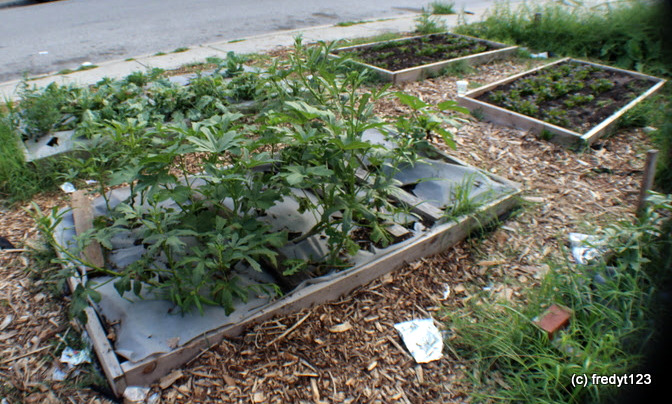
Fannie Lou Hamer garden. Photos (c) Fredyt123Group’s second parcel on North Mount and North Calhoun Street. Photos (c) Fredyt123
Photos (c) Fredyt123
More information on the Tubman House can be found here
Social media is here to stay. Some of you remember Myspace and although very popular, in time it fizzled. Are you familiar with Nextdoor? Are you using it? If not, why not?
Back to the Myspace comparison as it reminds me of the early stages of Yahoo. Both, literally had the market to themselves but something happened and they were overtaken by competitors who capitalized on their uniqueness and the result is they no longer sit at the top of the throne.
Some of you may have poked around with Facebook in its early days? You left and fast forward to improvements and better migration of how social media impacts our lives, you now find renewed interest in the way it allows you to connect to people and issues you care about.
In 2010, Nextdoor was launched with a very simple premise to allow neighbors to connect with other neighbors and communities to connect with other communities, on and on. It is a powerful tool and since its launch they have built a cult-like following so that users can embrace the social media phenomenon to discuss a myriad of issues, specific to their neighborhood. From the latest yard sale, to the most reliable handyman, to demolition projects and even connecting to public officials, it popularity is blazing trails connecting people and neighbors to same way Facebook allows personal interaction.


 [Baldwin Hills, CA] Celebrating its twenty-sixth year as one of the prominent platforms for independent film producers to showcase their work, the Pan African Film Festival commonly known as PAFF kicks off tonight.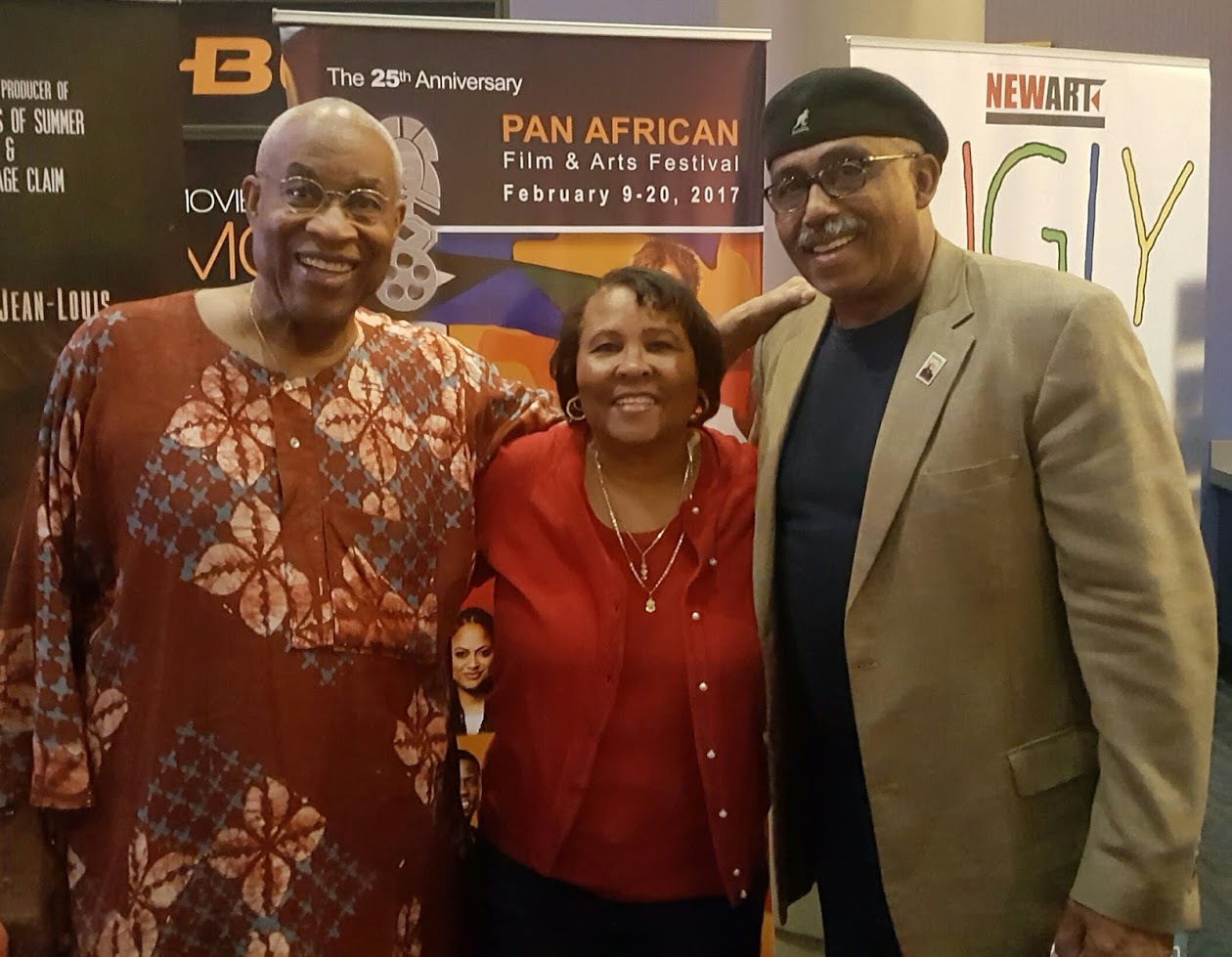































 Thomas Reports